When we came to the Rock of Gibraltar
We embarked from the Rock of Gibraltar
They inspected our clothes in amazement
Some young girls have decided to stay here
Farewell, my dear Neanderthal! I'll miss
You have provided for me, even though
The joys and woes you brought I can't describe,
No more will I lay eyes upon your caves,
At the Dawn of Man a spirit grew
He convinces all his hosts they are
Those outside the group, he claims, should be
Even members of the group who dare
Hosts are taught to ask no questions but
Of the sacrifices he demands
But the spirit is not exorcised;
Welcome to the Neolithic! As this moment marks the birth
Now we can spread out and settle anywhere and claim the land,
In the days of old we followed herds and ate our share of prey
Now we can form nations that will give us an identity,
In the days of old we wandered where our food would take us, hence
Now we can enslave each other for the benefit of all;
In the days of old a slave would have provided food for one
Now we can commit collective genocide and thus get rid
In the days of old we slaughtered families and tribes whose place
Now we can fight proper wars against the other nations who
In the days of old we battled with the other tribes and bands
Now we can create religions to enshrine the status quo,
In the days of old there were no masses that required control,
After he'd spent eternity alone,
And after all the galaxies and stars,
When man came on the scene, the god ensured
But Peracai was hardly satisfied
Soon Peracai found out she was with child,
The widowed pregnant goddess afterwards
She named her son Veruppu, and she taught
And so he waded through the corpses of
Nothing has changed. We all still spend our lives
Where shall we find a place like home where reindeer
We shall not gaze upon the river delta
No more we'll see the giant oak tops sticking
We'll go no more a-fishing in the channel
Now Doggerland is taken by the ocean
Laconia's sleepy centaur village woke
The little girl was much admired by all,
'She has a high-pitched voice,' he pointed out.
'We cannot tolerate her piercing voice.
So she was taken to the Outside, far
His grandson asked the chief, 'Why do we need
'True centaurs have a tawny coat, fair skin
'Thus we protect ourselves from change and fools,
'Shaped in the image of Kentauros, we
It soon got dark, and Chiron, with a deft
In the pale moonlight he set out and trotted
They welcomed him as if he'd been awaited.
For the first time he found himself surrounded
Some had dark skin and others white or spotted
'Who is your chief?' His question met with laughter.
He then was shown around; unlike his boring
He learned eight other villages were lying
They all were different, but the centaurs' yearning
'Them are unbiased individual thinkers,
'Nine villages that have a population
'Thousands, you say?' the chief appeared alarmed.
And so he called for volunteers to save
'We can't afford to let Them get a turn
Each volunteer approached the holy flame,
1.
Oh lost! Oh lost! I nevermore will sing,
They took my love away from me to bring
I'm rich - there was a lot for them to choose:
But as she's gone, no joy can e'er be mine -
2.
The magic of my lyre shall now decline,
The poet's magic is no longer mine
The magic of my voice has now expired
As for my one and only love I pine,
3.
My trembling lips won't utter any line
These yearning hands will touch no food nor wine
I served them well, so I don't understand
Whoever heard before of such a thing?
4.
To praise a girl, a hero, god or king,
Then Pegasus will take you on his wing
He flies no more, and I don't want him to
For now my heart was stabbed with Hades' sting:
5.
Oh lost! Oh lost! I nevermore will bring
Oh lost! Oh lost! My breast will never cling
I'll lay me down until my bones be stiff
If I could only hold again this shrine
6.
My kiss to lips as warm and sweet as wine
From all my earthly arts I shall resign
So come, sweet viper, let us go to sleep,
To Hades bring the burden of this shrine:
7.
My heart to one that is in need of mine
Why can I not receive this gift divine
I praised them - in return they stole my wife,
No sacrifices neither pray'rs I'll bring
8.
No more to my belovèd one I'll cling,
And once again the world shall hear me sing
Of their betrayal I will sing with fire,
They will not let me sing of my despair,
9.
My music nevermore shall fill the air
The sound of music that now fills the air
To Cerberus I'll sing a lullaby,
Then I'll meet Hades, and before I'll leave
10.
They took away from me my song-in-chief
You know yourself how hard it is to leave
It's me she needs, and it is her I need,
If still our separation we must bear,
11.
My swan of swans, my rose of roses fair,
We're free, my love: we can go anywhere,
Again the air is filled with cheerful sound
For if he turned his head for just a brief
12.
Who neither knows submission nor relief
There'll be no tears and no more need to grieve
Let's go now, and if your belovèd man
If he looked back to see if you're still there,
13.
Shall hide his art forever in despair
And she shall spread the tidings everywhere
Now look at Cerberus: he's still asleep.
But still we have to cross the Styx to leave,
14.
Oh lost! Oh lost! The world shall share my grief
But none of that: our freedom we'll receive,
Aboard, my love! His boat waits at the pier
Come back, my love, my one and everything!
15.
Oh lost! Oh lost! I nevermore will sing -
Oh lost! Oh lost! I nevermore will bring
My music nevermore shall fill the air:
Who neither knows submission nor relief
King Minos rode his coach through Knossos
And in a busy street he spotted
'I want this boy,' the king demanded;
'I could not love a man,' he answered,
With this he glanced across the courtyard;
'Talking of which,' the king imparted,
'She keeps on trying to seduce him
'Pasiphaë now does my head in
'For anyone who solves this problem
'An earthen Linear B tablet
So Daedalus set out and slaughtered
And when she learnt that she was pregnant,
She calved one sultry summer's evening
The king perceived her disappointment,
And yet Pasiphaë decided
It grew up in the royal gardens
Again the desperate king required
So when it was asleep he started
But just before Daedalus finished,
Daedalus only shrugged his shoulders
Most gaps were leading to blind alleys;
'My King, the isle of Crete is safe now,'
And from that day the queen was missing;
Alone he had to walk his gardens,
'No matter which it was that swallowed
So he was thrown into the tower
'It doesn't pay to spurn a monarch,'
Two vultures nesting in the window
And every time they left the tower,
The night before their crucifixion,
'We need to talk about our future;
As soon as he was gone they acted:
Before they jumped out of the window,
They flew all night. The sun was rising
So Icarus' example shows us
Daedalus made it to the mainland,
The king lay in the bath one evening
Upstairs was Daedalus, preparing
I needn't tell you what has happened
Thus he became the famous hero
The sacred snow-white cows speed up their pace,
Both men and women tremble at her grace
One day the goddess has to leave this place,
Take off thy veil, take off thy dress. Not shown
- A Bohemian Odyssey -
Left on the doorstep of the gods, he never
One morning, just before the Earth was rising
A gentle weirdness settled on the mountains
They didn't notice him as he was crawling
He took the night train to a constellation
And in the middle of the bustling city
Soon he had learned their art and was respected
Invited to the court, he found the beauty
Instead he was employed to play the lyre
And after many years of frugal squand'ring
'Who are you? And make sure you're not mistaken,'
'You may become a carpenter or singer
The autumn planets shed their wisdom lightly,
He laid his son, as the last leaves were falling,
After his victory Amosis held
'The Hittites and the Nubians just wait
'We are conscripting peasants to defend
'What difference does it make to them if they
The priests objected. 'We can't possibly
'I think of fully compensating all
'The Afterlife for peasants? That's insane!
And since that day the commoners enjoy
We flourished in the city that we built
Children were playing at the river banks
But treason was not far because the priests
Today the desert winds pile up the sands
Son, the questions you are asking
Many hundred years ago our
But their growing population
Yet one family was lucky
Over many years they managed
As the gods were feared, the priesthood
Soon each reference to Amun
Akhenaten built the city
Yet the subjects of the pharaoh
Ay, his grand vizier and uncle,
Tutankhamun, his successor,
We still sacrificed to Aten
As he came of age, the pharaoh
He destroyed the Aten's city,
Many of our folk suggested
As his name could not be mentioned,
When the Nile turns red in springtime
But that year the Nile was redder
And as Egypt's drought continued,
Atenmoses was our high priest
Shortening his name to Moses,
Down in Midian he'd witnessed
Ay was bored and yawned, but Moses,
Rotting corpses filled the delta
'It appears your god has power
Moses, falling to his knees, gave
Nothing happened. Moses gathered
But the children kept on dying
They threw stones, and nervous soldiers
Never looking back, we hurried
We were swimming in our brothers'
So today we roam the desert,
Why hast thou abused my faith, Lord?
Every time I was returning
With her childish voice she'd ask me
Now the Ammonites were fighting
Thou hast heard my earnest prayer
Never will her blooming body
My Etruscan flute will call you
As the merchant ship is sailing
When Aristarchus the Unheeded had
'The Sun's position towards them, as we are
Few listened. Those who did came to rehearse
'No evidence can ever contradict
'You have the bold audacity to make
Some checked his claim and found it to be true:
So Aristarchus soon came to the grim
*The belief that the world is built around one's own collective identities, from Latin nos (we) and centrum.
To thee, Cardea, we look up and pray
With Forculus and Limentinus cast
Accept the whitethorn we hung o'er the door
Ward off all evil spirits from this place,
So we wiped out the Carthaginians and
We’ve conquered Greece, as we had always planned;
But now the Roman streets are filled with Greeks
In strangeness we walk through the garden,
The mentor and friend who still brightens
We look at the waves of the Tiber
I'm successful, and yet I would rather
In the empty halls of Mithras
Long forgotten are his temples,
Romans brought him back from Persia;
Mithras didn't go on record
For the promise of a brighter
But one day they found their loyal
Healing the blind and curing hunchbacks,
John's disciples came to Jesus,
'In the dungeon of King Herod
'He who prophesied our Saviour
Jesus said, 'Go back and tell him
'Deaf can hear, the dead are rising,
Simon came to him with Judas,
'He has prophesied your coming
So they went to see the baptist
'I smell treachery,' a booming
'John, calm down! It's only us,
'He whom you prepared the way for
'Deaf can hear, the dead are rising,
'And how many has he cured?
'Who of those he raised from death
'I'm not blind, and I can't see,
'Any mountebank heals sick
'I was preaching of the Saviour
'He'll go back and see His father
'We awaited the Messiah
'How much longer? Yet another
'Tell your master I would rather
And the thunder of his mighty
As they left, the prophet's angry
But outside the air was sweeter,
At Calvary Mary was watching
In his name, with a passionate fury,
In his name Charles the Great went to Verden
In his name multitudes of crusaders
Even those who follow his doctrine
In his name intellectual, envied
In his name his disciples from Europe
In his name the church persecuted
And still there are Christians who murder
The king sat on his throne and raised his glass,
The jester rang his bell, arranged his gown,
The jester rang his bell, 'His Majesty
The jester rang his bell with knitted brows,
The monarch burst out laughing with his crew
Swiftly walking hill and meadow
Water fairies swam their races
In the woods I saw a willow
And the grass turned into heather,
Scent of centuries behind us,
Lead us to your scarlet garden,
Suddenly I heard a rattle
Victories and laurels counting,
Then he chopped one of the longest
In her room she was rejoicing,
Quietly he watched the lovers;
As he turned, he caught me standing
'Since four hundred'n'eighty-seven
'How I hate his horse and saddle;
Soon the sun flowed through the mountains,
I recalled the foolish vision
The fairy mother told her little daughter,
'A child just perished in her sleep which happens
'Her loving parents then won't have to suffer
'When she grows older, will she not remember
'And will the way she acts not be quite different
'Changelings help humans, though they rarely notice,
She and her daughter sneaked into the bedroom.
The mother stirred. 'I feel that something happened;
The priest addressed his frightened congregation,
'We do not know why Wodan kept his silence
'We do not know why Donar hasn't punished
'These unbelievers worship inside houses
'The preachers of false gods now seem to triumph,
'Wodan, in his eternal grace and mercy,
'Though we be slain today as Wodan's martyrs,
'Should we betray the ones who gently guided
'Those who submit will never see Valhalla
'Preserve your piety; the blood of Verden
'The blood of Verden on their hands will mark them
'Dying for Wodan is the greatest honour,
Put to the sword, the dauntless congregation
In a valley near the ocean
In a mill the men were grinding
Mansions, roads and public places
But one morning when the silence
Chanting hymns, the Lord's battalion
'With this town I have created
But the clerics were not mortals
Patrick and his monks selected
Yet no weapon could undo them:
Soon Nagnata lay defeated
On that sunny Easter morning
Then the sky was set in motion,
And he watched the waters rising
Dolefully he took his magic
- Where the hawks and crows examine
You may see the desolated
Their tents extended far beyond the valley,
Harnesses jangled as they groomed the horses,
The pensive king on this side of the valley
Two rosy cheeks had captured his affection
Their tents extended far beyond the valley,
(Translation of Börries von Münchhausen's Jenseits des Tales)
Dame Alice, stern and with aplomb,
Accused of having killed the lot
To strengthen their convincing case,
He, as officials clipped his wings,
And proof of witchcraft soon was found
She was condemned without ado
She hied into the skies that night,
The only ones Dame Alice brought
But sometimes on a rainy night,
Our desert ships are trailing
Loaded with many a treasure
The grim Sahara threatens
We trot beneath the searing
Days to the next oasis,
Our party is impeded
But then our efforts render
Yet after weeks of leisure,
No one knows his name. A native
After many years we find him
Ferdinand Magellan christens
Through a rising in Morocco
From another expedition
But his monarch shows no interest,
Many years of preparations
The Canaries and the western
Further south they can return to
Then they come to Patagonia
Being stuck for one cold winter,
Hundred days they sail the ocean;
Natives in their boats surround them,
Here the crew receive a welcome
Then a foreign trader tells him
But the Mactans are objecting
Reunited with his people,
Amidst the Aztecs' golden works of art
'If the Chinese had brought their much-revered
'They would have killed most strangers once alert,
'They would have grabbed your land by force or stealth,
Although the king was unamused at first,
The sun set as the seals were playing, the evening sky embraced the briny,
They raised their horns; the drink had mellowed the sailors as they sang their shanty,
The others laughed. 'You must be joking: you'd rather find a four-leaf clover!'
'I know what I have told you;' laden with hope he said, 'I have been erring,
'There may be faster ways to harden the metals in the smith's profession,
'For every conman there's a lesson to learn from any girl's performance:
So they sailed home. The captain faltered when disembarking; though still pretty,
'There is a man,' the priest was chanting, 'whose soul was doomed for generations.
He grabbed his hat when Mass was over and tried to talk to young Elvira.
But when he thought he'd been deserted, she met the captain in his bower.
Enraptured by the lambent stellar allure she answered his embraces;
They married secretly and rented a little room. 'When you are near me
'I must away!' - Her man entreated his bride to cease her sobs and grouses.
'Once we were sailing the Atlantic. A calm impeded us for ages;
'Hard is the punishment,' he ranted, 'impossible is my salvation;
'This sounds too strange to be a fable, my captain, and I do believe you,
Aboard he roared, 'Did I not tell you to keep me from my foolish mission?
'I'll save your souls!' - The sailors wavered and turned their faces to discover
(based on Heinrich Heine's version of a Dutch legend)
The sleepy town of Penance,
Ruled by the Ten Commandments,
No one had been a farmer
Goody arrived in Penance,
On their extensive farmland
There was no break for Goody
Soon an ungrateful harvest
They chose to rob the Indians;
And on the eve that followed
'We've food to last the winter,
'But some fought back, and Joseph
The doctor who examined
But Goody swiftly gathered
While rumours started spreading,
Joseph displayed his grateful
Once Widow Huxley called for
'His death would be my downfall,
Yet when the doctor saw him
But Goody mixed a potion
Once more some people doubted
'She helped the desperate widow;
But women made assertions
She left before they noticed
At dusk a Creole pig was sacrificed
Captain François Capois on bended knee
The drums began, accompanied by chants
The priestesses, to host the loa, dived
He noticed Baron Samedi who sat
The loa helped themselves to cake and rum
He said, 'I have refused to dig your grave,
At break of day Forts Bréda and Vertières,
'Forward!' he called and led the way; his men
'Forward!' he called and led the way as soon
'Forward!' he called again and led the way;
The battles raged all day, but then, as night
That fateful night was sealed, from shore to shore,
Thus Haitians gained their independency
The master proudly took his work of art,
He had supported him right from the start,
But then Napoleon, able to outsmart
Dethroning his old hero, Ludwig threw
The man who'd changed the course of music
Beethoven anxiously expected
Goethe arrived, and after greeting
And suddenly they saw the empress,
Goethe who was a hopeless sucker
He doffed his hat in deference and
Beethoven simply kept on walking,
'Quittin' time,' a sweet voice calling
But the master saw it, shot him
'Even now I could outrace you!' -
'Give me time to get a bandage
'Dad, today the massa shot me
'Have you lost it altogether?' -
'If I win that race against him,
'That's ridiculous! I'm certain
'On the count of three,' the master
'Wonder if he'll ever get here,'
Frozen to the spot, the baffled
'I was sergeant in the army,'
He was running like the devil;
'Tucker, you're not even sweating
Soon he faltered and he panted,
At their quarters son and father
(based on the fable De Haas un de Swinegel ['The Hare and the Hedgehog'])
I first noticed the Assassins when I wasn't even three
Feeling grown in adolescence, I became courageous and
As a sergeant major, serving far away, I once received
Then the tide, it seemed, was turning: happiness approached my life
And behind the grand piano the Assassins stood and smirked
Many years they kept on playing their perverse sadistic game,
Two years later as I travelled to the Richmond of my youth,
We decided I'd collect my aunt and my entire estate
'Edgar, darling, you have fainted!' I could hear Elmira yell.
There I took the train to flatter an aspiring poetess
Walking to the railway station, I reflected on my case:
Maryland would hold elections on the third, and so I changed
After I've been sleeping rough to stay unknown, all I desired
Now my selfishness of living ends beside a polling place,
Her dark bright eyes looked at the master;
She added, 'Just a few more minutes,'
'Then you can gambol with Miss Annie
'Why are you here and don't pick cotton
'You're not a person, Aunt Abmaba,'
She asked the boy, 'What is a person?'
That moment was a revelation,
As a young man he went to study
He sold the sorrowful plantation,
When Annie Wilcox and her husband
'Whatever happened to Todd Stevens?
The watchful guardian awoke Thutmosis,
The pharaoh started up, breathed deeply, rose from
'My chariot at once,' Thutmosis ordered.
When Owen Phibbs at last returned from Egypt
He laid them out upstairs beneath the skylight
The pharaoh's chariot raced through the night sky
As the foundations trembled and the china
Thutmosis faced the family in anger,
That very moment, through the open skylight
'What in God's name was that?' - 'That owl was Ammit,
'I am so sorry,' Owen told Thutmosis,
'I won't find peace without her, yet I have to
And back it came, night after night. The clamour
Time watches. Seafield House is long abandoned,
But after dark a grim unearthly clatter
Charity Butler claimed her freedom
Thaddeus Stevens, representing
He won the case. The devastated
Henceforth he never represented
'What is it?' Stevens asked the woman.
As Pennsylvania legislator
He set up house with a biracial
The Compromise of 1850
'Since you believe this institution
Should Women, Too, Hold Civil Office?
A congressman from California
When Abraham Lincoln was elected,
And so the Southern states seceded,
Stevens proposed a resolution
'Now's not the time for such an action,'
'You call me radical for stating
'They laugh at us all over Europe,
'I wouldn't call a slave my equal,'
'Sir, your society deported
One year had passed since Stevens' motion
General Early rode to Stevens'
Thaddeus Stevens kept on pushing
His heart was clenched as he moderated
When Lincoln was assassinated
Uneasily he voted for the
A bill to put the Indians under
Because he sabotaged all progress,
Before he died he learnt the graveyard
Captain Briggs was about to retire from the sea
A valuable cargo of alcohol, bound
She set sail from New York once the weather had cleared,
Once the tempest subsided, he ordered his crew
As Sophia, his two-year-old daughter, was fed,
'She'll explode!' Briggs exclaimed as the fumes hit his face
Captain Briggs who kept rushing his crew and his kin
'We're near Santa Maria, and there we can find
One may wonder about one's own goals unachieved,
'What am I doing in this place?' the ageing
'I fought when white invaders violated
'Their rifles couldn't quell our angry voices,
'And yet we held out longer than all others
'And now I'm but the pale invaders' flunkey,
'These days I'm merely travelling, rehearsing
'I was the last to stand against the traitors
'I shall rejoin the people of my nation,
'We need protection and we need it now. Indians are dancing in the snow.'
Stand in the circle and hold hands and shout,
My brothers, I bring news from your departed
The white man will become the world's pariah,
And this time he will not be disappearing
Stand in the circle and hold hands and shout,
He led me up to Heaven on a ladder
'Come spring, your land will once again be teeming
'The new world I'll create will be a better
Stand in the circle and hold hands and shout,
'Your noble brothers' teepees will be spreading
'And in that life which I shall be attending
'But don't attempt to fight the vile aggressor
Stand in the circle and hold hands and shout,
He gave me ghost shirts which will be protecting
Then the Messiah brought me back from Heaven;
Dance East and South and West and North with passion,
Stand in the circle and hold hands and shout,
Another movement teaching that the answers
How to build the longest railway in the world without the funds
As the natives were unwilling, convicts had to do the work,
Never knowing what's around the corner in this hostile land,
We dug tunnels through the granite rock formations with just picks,
In the taiga there's a forest darker than the world of yore
Places mapped as steppe quite often turned out to be swamp or wood
Hundred thousand built the railway, thousands died along the way
Casey Jones the engineer
Once his fellow engineer
When an engineer got sick,
More than half of the delay
'Something's on the tracks!' Sim screamed.
Since the speed had been reduced
When Leopold of Belgium took the Congo,
The men who didn't meet the daily quota
During the rubber monarch's reign of terror
The world was outraged as the news unfolded:
Years passed. Meanwhile the proud Herero living
With the expressed intent of their extinction
Some people were alarmed, but others told them,
What remained of the Herero had been driven
More than three quarters of their people perished
'On the long record of civilisation
'We will from now, in order to alertly
The busy World Fair in St Louis
There were the Tlingit from Alaska,
From the new colony Negritos
From South America Patagonians
Here scientists informed the public
The fair was instantly successful,
He had expected African Pygmies
It was months later Samuel Verner,
One in particular attracted
With the display of Ota Benga
And when the fair at last was over,
Located in the House of Primates,
The New York Times encouraged readers
After a while he was permitted
One day as Ota was assaulted
His keepers, due to the attention
But every evening it got harder
Meanwhile black members of the clergy
And yet, according to the director
After some pondering he therefore
He was supported by the caring
He ended up in Lynchburg, working
He took the neighbours' children hunting
And when he could afford his ticket,
That night he broke, with all his hopes and
'One equal temper of heroic hearts,
We're almost there! Just one more day to go
We pack our sledges and we travel forth,
We should be celebrating in the field
Evans looks wild; there's madness on his face,
It starts to snow. We argue where to go;
Evans has stayed behind and soon is found
'Why don't you go ahead? I'll find my way.'
'You'll have to leave me to survive.' - The same
Eleven miles to our next depot; we
Two weeks have passed, and still the blizzard's rage
It won't be long before I'll be relieved
Then they said, 'Come, let us build
ourselves a city, and a tower with its
top in the heavens, and let us make a
name for ourselves,
Sombre and black, without a single motion,
And there she came; the dockyard's noblest daughter,
Some older couples stared at the Atlantic,
The diners raised their heads and joined the chorus,
'Last orders,' rang the bell at half eleven
'Iceberg ahead!' the lookout got excited,
'Astern! Astarboard!' cried the navigator;
The prow turned left - how softly she was gliding;
The noise disturbed some poker-playing brothers,
'Oh, is that so,' they said and kept on playing,
The worried skipper ran as fast as never
'Let's leave this boring game of bridge to Mother;
A snobby undertaker rolled his eyeball
'This is a satire: on the upper deck sits
'Come, women, bring your children!' they implored them,
A sceptic crowd which was politely guided
A storied moneygrubber took a jacket,
He claimed a lifeboat seat: 'I can afford it;
He told his wife, 'That boat seems most unstable
A salesman's widow left with grateful thinking
'Now here's the lifeboat. Madam, won't you enter?' -
'We've almost for a lifetime been together.
'No,' said the priest to his young wife with fire,
'No one will help us, neither all your brothers
She foundered with the water she was gaining;
She called for help; not many heard her calling,
A sudden gush of water was surprising
All those who could not board the overcrowded
After she disappeared, there was no motion.
'It was a good fight anyhow.' – The O'Rahilly
On Good Friday he burst into Patrick Pearse' study
'Calm down,' Pearse replied. 'It is hardly surprising
The O'Rahilly laughed, 'You have got no equipment
On Saturday calls for a cancellation
On Easter Monday he rose and, finding
He was welcomed, and Constance asked him with gladness,
From Liberty Hall, with specific commissions,
They entered the GPO and gently
In a phone box he found a young soldier, unable
Patrick Pearse proclaimed the Republic under
With the post office fortified, those in attendance
A small troop of soldiers was sent to get answers
The O'Rahilly watched as a crowd of civilians
On Tuesday evening Lord Wimborne, in writing,
On Wednesday affairs got a little more iffy
Surprised at the heavy bombardment, the gritty
By Thursday when Sackville Street was burning
On Friday afternoon, on the border
Being asked to lead a small band as the curtain
With a dozen men he ventured the sally,
An ambulance passed in the night; the alerted
On Saturday morn to his wife whom he cherished
Was it because the last surviving Tommy
Was it because when Harry was conscripted
The church bells all rang out to celebrate
The war to end all wars had ended, and
His poems on the savagery of war
A messenger then rang the doorbell: 'Ma'am,
The Mediterranean was in motion
Escaping war and prosecution,
From war-torn Europe they were pouring
Ashore a Syrian provided
Wrapped up in blankets from the depot,
He told the Syrian, 'I never
The Syrian replied demurely,
'Life is too short to hesitate
'Our bulletins reach thousands, some
'I know of an accountant who
As Beppo Römer and his aide
The guard sniffed Joshua like he was a turd.
The boy knew what this meant, for often he
'I cannot wait for that great day to come,'
'Praise God that in his wisdom he saw fit
'These rats will nevermore control our lives
'And now the enemy who tried to heist
'Karl carved a world map on a Jewish hide,'
Joshua who feared the closing of the day
He told them, 'I'm afraid I'll have to damp
A few years later Joshua led his troop
'We have been given half a country; now
'The Palestinians who have refused
'God has commanded us, because we are
'And before long we'll also take the rest
A family ran past them, and his men
And as he checked, there was no single trace
'Come here,' he told the others, 'and admire
'All these barbarians don't care about
This genocide is now officially declared
Eight hundred thousand have to leave their homes behind;
And so our exodus begins; we have to yield
The never-ending train of refugees leaves tracks:
Of those who didn't starve to death and who weren't shot
The future that awaits us will be bleaker still:
When our ancestral home at last became
Professing God has ordered them to take
The heartless settlers call us vermin while
We're hunted down like animals, and just
And anyone who with an upward fist
Building their cities on our orchards and
Christians from Europe craving land
Unto this day they keenly keep
And now, as bigots tend to do,
Today we claim that we have brought
And we commemorate our white
(Response to Rudyard Kipling's Recessional)
He was the Matthew Hopkins of
He caused a panic never seen
He ruined countless lives without
But after years his star declined
The nine skied hard against the wind that froze their every limb,
'We have no choice but to turn back,' Ludmilla claimed. 'We will
'All right, let's settle for the night,' Igor put down his pack.
The light that stung like thousand darts had caught them by surprise.
'They're testing weapons, but not ours,' Sasha assured his mates,
'We must report this incident,' Sasha just wouldn't quit.
'It's called Dead Mountain,' Zena told the others, unafraid,
So George suggested, 'Let us sing instead of telling tales
Hours later, in the still of night, Sasha woke up to bawl,
Grabbing a ski stick, Sasha rose, struck Rustem on the head
Rustem got up, and even though still dazed and in dismay,
Dressed for the night, they now were left out in the arctic cold;
Nick took his flashlight and began to climb the cedar so
'He can't have wandered very far in his condition; if
The three set out to reach the camp, but Igor soon broke down,
When Alex wakened from a deep slumber he saw that Nick
'They're dead,' he said, 'we may as well take some of their attire
They dug a shelter, and they laid it out with twigs they found
Standing in front of them, he struck Nick's head which almost split,
'You've always had the sharpest tongue.' he said and cut it out,
Alex awoke once more to be affrighted, scared to look;
Their country had at last been liberated;
So Washington decided to retake it
As Kennedy assessed the situation
'This was not only the most dangerous moment of the Cold War. It was the most dangerous moment in human history.'
World history provides too few examples
Preparing for the next US invasion,
While Kennedy and Khrushchev, in summation,
US destroyers dropped, amidst the hassle,
The captain, reasserting his position,
The voice that disappears can still be heard
When activists attempted to increase
Their brutal murders, as the public saw
Their fellowship could not have been much prouder:
The bright full moon shone through the broken window
As she eventually came to it, Gemma
Thirteen of her most popular fellow students
Holding a ceremonial dagger, Kristy,
But suddenly the sacristy door flew open
They headed for the gate but found it guarded
They sneaked into the churchyard, and he told her,
'I long suspected Kristy of black magic,
They heard the others' voices which came closer,
When all was quiet Gemma begged him, 'Take me!'
'Once I am sacrificed there'll be no marriage,
'Are you quite sure?' he let her reconsider,
Kristy approached the lovers who, surrounded
'You must get an abortion, Ronda,'
Her fiancé and future in-laws
'Once we are married we'll have children,
Facing such opposition Ronda,
But as she went to bed that evening,
She would be hearing children's laughter
After a sleepless nightmare Ronda,
When she was seven years, her mother
Next door was an abortion clinic,
Norma McCorvey was not only
Returning Emily's affection
Then, during their unlikely friendship,
As Norma listened to the story,
Another day she passed a poster
Looking at tiny eyes and fingers,
Distraught at such a heavy burden
She couldn't put, like other people,
'But Jesus can and will forgive you,'
The thought of an authority with
She bowed to one whom she believed to
Welcomed by Christian congregations,
The vampire governments have risen who centuries ago
The blood of innocents and paupers tastes best to them, but when
In reservoirs and water towers they store our precious blood,
The vampire governments keep draining our blood for them and swear
'We're not to blame, don't drive that wooden stake through our hearts,' they woo,
'All those whose way of life is different, thus causing you unease,
Venetia, having had her breakfast, hovered
A lifetime afterwards it has been noted
They're not heroes who kill thousands
Weapons expert David Kelly
And when Julian Assange created
Bradley Manning who supplied him
When Malala Yousafzai broadcast
Edward Snowden told the public
There are more - some whom we know of,
Faint promise brought you here, the hope to find
The gun's the law, and life is cheap; you will
You and the others live in poverty,
We brought young girls, some of them natives, here,
Waste can be thrown into the river, dumped
You'll find it difficult to breathe in this
It's cold all year, the lines are mostly down,
'Ma'am, would you please collect your son?
'No, ma'am, your son has, to be frank,
'He was misled; we understand
'Come down to Kyiv, pick up your
In Germany, just eighty years ago,
In modern Germany a person who
When Maryam who had nine months ago
Their kin assemble in their house that's been
But suddenly a mob of settlers breaks
The settlers set up house as they condemn
Some leaders who are holding
Each death is celebrated,
They truly are defending
After she took her children
We're living in a Weimar world, and night
Amidst the hanging trees of days gone by
They knew it'd happen but could not foresee
One's brother soon could be one's enemy
The mantle of foreboding fell upon
That night they went to bed uneasily
For many years he entertained deaf ears,
Long have I warned your people without cease -
Once a landlord in a pretty
All the time he was forgetting
He was wealthy, he was greedy,
On the outskirts of the valley
As the city's sole purveyor
Everybody had to render
Thus enforcing law and orders
Nothing passed unknown: no stealthy
With a club he struck their heads and
Soon some helpers were recruited:
Facing poverty, his latest
Thinking of a vengeful gesture,
Mighty flames were now appearing
'Help us, please! Our living centre
Some preferred to die as quickly
Soon the city celebrated
Once upon a time, or rather
Knowing of the awful slaughters
Genocide is somewhat newer:
The contempt for life in cities
Why is life's esteem so clouded
So he learned of situations
He explored the body's guidon
Any overpopulated
Every race she instituted
But in case the population
Those will turn against their brothers
Every war, attack, oppression,
All the battles of the nations,
When the substance was located
'Conflicts will be disappearing,
'Why,' he thought, 'why should I worry?
We expect that future generations
That a more enlightened people shudder
But I fear that future generations
The old magician wrung his hands in terror:
That word would bring prosperity and gladness,
Mankind's destruction is her only mission:
She waited for a little tiff with patience,
She saw mankind creating their first borders
He read the tablets once again; a caustic
'I summoned you! You must reveal,' he beckoned,
Across the Strait
to establish our homes in its caves,
we discovered a beckoning landmass
a few sea miles across the tall waves.
Once our people moved in and got settled,
our bold youth built a boat to explore
the new continent, terribly eager
to set foot on its wild rugged shore.
to examine the land we had found
where we met some most curious creatures
on the plains, and where large ones abound
we encountered some strange lanky people
with small heads and flat faces who wear
only furs they throw over their shoulders
as they freeze in the wintery air.
and my necklace with plumes of a daw,
and when we, as we do in cold weather,
lit a fire, they all watched us in awe.
Then the sound of our flute seemed to scare them
until slowly they joined in the dance
round the campfire where some of their people
approached ours as they noticed their chance.
with young men they have come to admire
and who'll hopefully manage to teach them
to play music, make clothes and light fire.
But the rest of us daring explorers
will return to our windswept old mount;
we embark for the Rock of Gibraltar
where our loved ones await our account.
Leaving the Neanderthal
your rugged features, and I dread to face
a life away from you without the bliss
of sleeping safely in your tight embrace.
at times quite sparsely, but my thanks are due,
yet often I - I thought I'd let you know -
wondered if I meant anything to you.
and I would love to stay, I must declare,
but since the mammoths have moved north, our tribe
must follow lest we perish in your care.
your precipice, your sprinkling waterfall,
your grotto with our ancestors' cold graves
nor you; farewell, my dear Neanderthal!
The Most Malignant Demon
who has shaped our species' destiny;
everywhere mankind obeys the voice
of the Demon of Conformity.
part of something larger and without
value of their own, and that their group's
welfare is what life is all about.
treated with suspicion since they're all
hostile and inferior and since
they obey a different master's call.
to diverge from those around them face
wrath and hatred from the demon's hosts,
being called a traitor or disgrace.
blindly follow orders and decrees
and to look away when witnessing
crime, injustice or atrocities.
lots are human; with their state of mind
his obedient hosts facilitate
all the sufferings of humankind.
very few consider him to be
harmful since most humans are possessed
by the Demon of Conformity.
Blessings of the Neolithic
of civilisation, we will conquer and subdue the earth.
Over are the days of hunting, gathering and moving on,
and those primitive behaviours and techniques will soon be gone.
killing or displacing natives so our culture can expand,
planting crops and grazing cattle on that land or, better still,
find some people who will do it while succumbing to our will.
or the fruits and roots and mushrooms we located, but today
workers are receiving none of all the slices that they carve,
and land owners make a surplus that will rot while farmhands starve.
claiming lands of next-door countries as our own while bitterly
ridiculing other nations for their lack of being us
since we feel superior for reasons we will not discuss.
always being ready to depart was merely common sense.
Oft we stayed in one location but moved on when things got tough;
now we're settled in a single place that's never big enough.
slaves who work on our plantations and obey their masters' call
feed a multitude of people, even those whose heavy hands
never have to lift a finger since they claim to own the lands.
while consuming food for one, and that is why it wasn't done.
Nowadays a slave who's working can provide, under duress,
food for thousands while consuming food for one or even less.
of ethnicities we loathe or who oppose our forceful bid
for their country, reassuring everybody we are right
by denying that they're human and dispatching them on sight.
we took over with our people; now, whene'er we meet a race
whose existence irritates us, we, while still the iron's hot,
have the people and equipment to exterminate the lot.
disobey us, and whatever it may take, we'll see it through
with the rabble's sacrifices on the field of honour where
bodies lie piled up to glorify the leaders who don't care.
over shelter and resources that were often changing hands,
but today we fight for people we have never met or known
next to unfamiliar faces and for causes not our own.
to discourage any questions, to get rich through others' woe
and to soothe the rabble with the promise of an afterlife
where the humble are rewarded for their deference and strife.
but today we need religion to ensure that every soul
serves their godsent master and to, most importantly by far,
justify the other blessings that have made us who we are.
Creation and Subjugation
god Arivu, who was the only thing
that did exist back in the olden days,
got bored and finally decided that
he would do something with his life. He tore
some of his hairs out, rolled them in a ball
and started to create the universe.
the planets and the satellites were shaped,
he took another look at Planet Earth
and populated it with lots of plants
and many creatures whom he brought to life.
they had enough to eat and oftentimes
appeared to them in human form to help
and settle petty squabbles that broke out
amongst their families or tribes. On one
of these occasions Arivu laid eyes
on Peracai, a lissom maiden who
was fetching water from the village well,
and fell in love. They married on the spot,
and Arivu saw fit to deify
the girl and have a goddess by his side.
with anything he had to offer her;
whatever he would give her, she'd demand
a multiple of it, be it the pearls
he used to decorate her lavish crown
or all the marble for the temples that
he built for her. While he looked after man,
she craved the little they possessed and claimed
that as a goddess she's entitled to
whatever she desires without regard
for humans and their sufferings and deaths.
and she devised a plan to rule mankind,
helped by the son she carried, and one night
she poisoned Arivu with hemlock wine.
travelled the world, instructing every tribe
in worship, pray'r and sacrifice to her,
with her instructions being different for
each of the tribes, while stressing that the way
to worship her would have to be observed
in every detail. Every family
each year would have to sacrifice at least
twelve cows; who did not have them was allowed
to sacrifice a human in their stead.
'But we shall starve!' some chiefs entreated her,
to which the goddess callously replied,
'The more you sacrifice to me, the more
I'll give you in return,' but failed to state
the nature of the blessings she'd bestow.
'And once he is a man, I'll send my son
to help you with your problems and to cope
with any difficulties you may face.'
him that the Earth was theirs with everything
that lived on it. They saw their cattle herds
and slave gangs grow each year when humans brought
their offerings, and when he had grown up,
she sent him to the villages and tribes,
intending to divert their anger from
the unloved goddess to their fellowmen.
the famine victims till he reached the tribes,
and he informed the men about the true
reasons for all their sufferings and pain,
which were, according to his mother, but
the sins of their respective neighbours who
worshipped her incorrectly and who sneaked
into their sheds at night to milk their cows
and steal their eggs; 'Just look at them,' he urged,
'they're different from yourselves - in fact, they are
not even really human, and as long
as they're alive and dwelling next to you,
you cannot prosper nor exist in peace!'
And for a little while he'd stay to watch
the bloodshed he had caused and then move on
to the next tribe. Eventually he returned
home to his mother, to their large estate
which covers most of the entire world
and their vast herds which never will provide
milk, food or winter clothes for anyone;
possessions merely for possession's sake.
catering for the leeches, and we blame
each other for our poverty and thrall.
Our blind compliance is her only strength,
so if we simply ceased our offerings
to Peracai and started disregarding
Veruppu's splintering advice we all
would once again live in a world of plenty
for everyone, just like in the beginning.
Memories of Doggerland
and aurochs graze amidst the verdant plain,
with lakes and brooks providing clean fresh water
instead of us collecting dew and rain?
again nor climb the rolling Dogger Hills
to watch the travels of the woolly mammoths
and practise and perfect our hunting skills.
out of the sandy mudflats at low tide,
and all our forests, vales, lagoons and marshes
have disappeared with all they did provide.
where Thames and Rhine once merged with other streams,
and of our huts, our village and our people
nothing remains apart from us, it seems.
with its abundance and its beauty; thus,
though memories will stay throughout our lifetimes,
at last those images will die with us.
The Themming
up to a newborn centaur's shrill first cry,
and soon the family and neighbours spoke
of nothing else, and many friends stopped by.
and everyone was happy with a brief
smile from the baby, but at evenfall
the crowd was interrupted by the chief.
The mother said, 'She may grow out of it.' -
'Centaurs, as you know well without a doubt,
are born with booming voices or unfit.
As a community we must condemn
the girl, so in this matter you've no choice;
your daughter, I'm afraid, is one of Them!'
beyond the village borders in distress
where she was left with Them, the ones who are
riding in what's perceived as wilderness.
to banish all the ones who don't conform
to narrow standards?' - 'That's how we succeed:
by sticking to the rules and to the norm.
and a deep voice, respect our hierarchy
and don't ask questions; those who don't fit in
must be removed from our community.
hold on to our traditions and secure
our kind's survival; following these rules
for many thousand years has kept us pure.
are the real centaurs; on the Outside there
are mutants, cannibals who'll never be
like us,' the chief warned Chiron. 'Be aware!'
step, sneaked out of the village (though he'd learned
no other place was safe) which few had left
of their own will, and none of whom returned.
across the gloomy forest until morning
when in the distance by a brook he spotted
a centaur village as the day was dawning.
'Another outcast from the Sames tribe, is it?' -
'No, I'm just visiting from there,' he stated.
'Not many Sames have volunteered to visit.'
by centaurs of all colours and complexions,
a village where variety abounded -
with no requirements, there were no rejections.
coats, some were talking in falsetto voices,
some wore soft blankets, some wore fancy dotted
circlets, and all esteemed the others' choices.
'We all are equal; we don't lead or follow.'
He was invited to a meal whereafter
some sang a parody that praised Apollo.
home streets, identical as was the fashion,
no house or garden looked alike, a roaring
display of individual expression.
in the vicinity, and he decided
to visit them as well as he was trying
to understand the Outside Sames derided.
for freedom and their friendly disposition
were universal. As he was returning,
he told the chief about his expedition.
accepting others as they are, who seek
to understand the world so none wears blinkers;
they all are equal, cultured and unique.
of a few thousand lie beyond our wall.
We should initiate communication
since we could learn from Them whose wits enthral.' -
'If Them outnumber us, they are a threat
to our civilisation. We need armed
troops who'll defend our kind without regret.'
their village from its imminent demise,
reminded them to be prepared and brave
and stressed that they must catch Them by surprise.
nor any of those heathens to survive;
all of their cursed villages must burn
and none, adult or child, be left alive.'
held by the chief, to set his torch alight,
and soon the task force, to the crowd's acclaim,
galloped into the silence of the night.
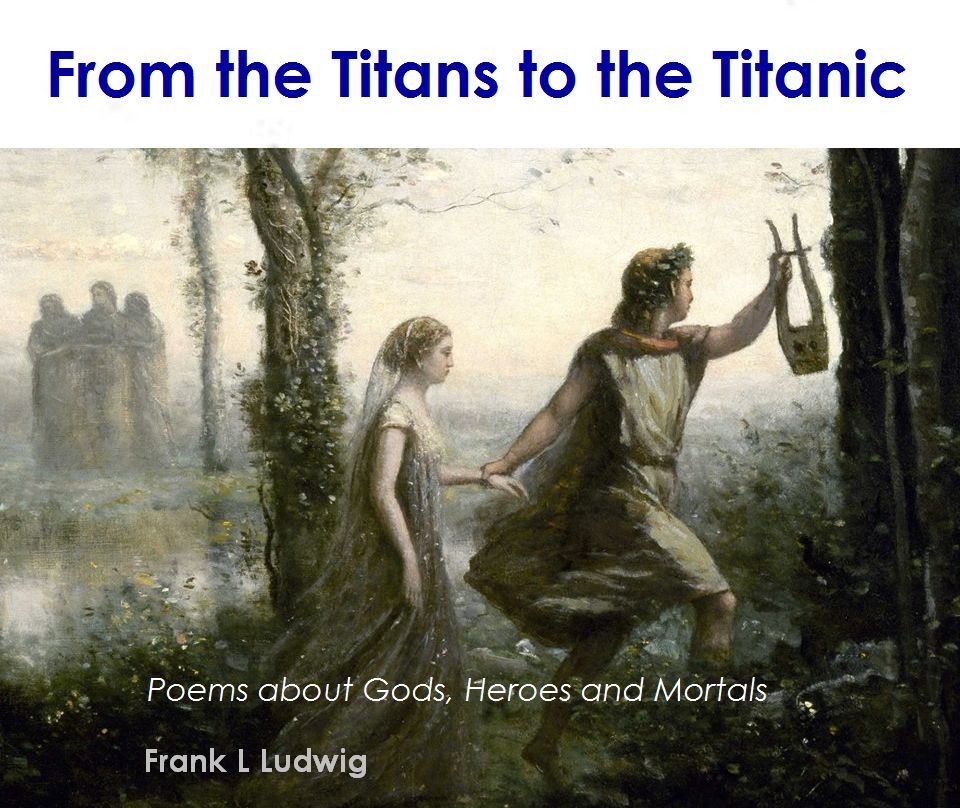
The Lyre's Death
no more my lyre shall please another ear:
as she I played for is no longer here,
I'll never touch a body nor a string.
her to the underworld, the place of fear.
They made her as a shadow disappear -
none of Life's seasons did she know but spring.
my gardens or my art they call divine,
and none of those I'd be afraid to lose.
as she has left me, I will leave my muse:
the magic of my lyre shall now decline.
her noble sound shall nevermore be heard
that made in silence listen man and bird
and turned the tears of sadness into wine.
since greater evil powers have occurred,
powers that can't be fought by sword nor word
and that forbid the sun for me to shine.
that once sent golden shivers down your spine,
the singer from his business has retired.
the only one I ever have desired,
my trembling lips won't utter any line.
till they can sing to her I love once more,
till they can meet the lips I kissed before,
till in her arms my sorrow will decline.
till they can hold the lady I adore,
till once again her beauty they'll explore
before her longing flesh will melt in mine.
what caused the faithless deities to bring
such pain and grief to their devoted friend.
There is no other voice throughout this land
to praise a girl, a hero, god or king.
your inspiration, power and goodwill
shall be accompanied by talent still,
so singers will enjoy hearing you sing.
to where the noblest artists get their skill:
he'll stamp with force upon the holy hill
and open with his hoof the poet's spring.
as long as to the arms of Death you cling,
though no one else can sing the way I do.
this cup of passion and of love to you,
oh lost! Oh lost! I nevermore will bring.
to you my gifts of poetry and song:
I only wish that they could be as strong
as those who drew you in their fiery ring.
again to breasts that quiver as they long
for my soft touch; how could they do such wrong
to him who of their glory once did sing?
and no more life flow through this flesh of mine
to be with you: without you I can't live.
of precious love, if I could only give
my kiss to lips as warm and sweet as wine.
I'll bring again before the dawning day;
beside my lover I will always stay,
our lucky star for evermore will shine!
as for my lady once again I'll play;
our timeless beauty will not fade away,
the fervour of our passion won't decline.
and while in peaceful dreams for her I pine,
your venom run into my body deep!
deliver now, no more to moan and weep,
my heart to one that is in need of mine.
won't come, for lack or surplus of respect
has caused my serpent servant to reject
her master's wish, and still I have to pine.
to wax immortal by my death? In fact,
the jealous gods in every way neglect
the herald of their glory and their shine.
and of the grace of those I shall not sing
who faithful artists of their song deprive.
to those who took my love and spared my life;
no more to my belovèd one I'll cling.
no more I'll look into her eyes so bright,
but with my weapon I'll put up the fight:
I'll get my lyre, and I will tune her string.
the songs of gods - their mockery and spite,
their wickedness, their rancour and delight
in all the pain and sorrow that they bring.
of all the sufferings I have to bear
and all the tears of her whom I admire.
but if they take from me my voice and lyre,
my music nevermore shall fill the air.
with marble temples or with golden rays
nor bring delight and laughter to the face
of him who listens, but why should I care?
uncovers all the malice and disgrace,
the cheating manners and the evil ways
of gods and heavens, but why should they care?
and as he sleeps, I will just like a thief
sneak to the underworld where her I'll spy.
he has to let her go or tell me why
they took away from me my song-in-chief.
into your kingdom, and you still refuse
to let me join her; why do you abuse
your power just to make me weep and grieve?
your lover, but at least you never lose
your wife forever - so that's no excuse,
although your annual rendezvous are brief.
so let my faithful lady leave your care,
or let me stay here lying at her feet.
at least allow me now and then to meet
my swan of swans, my rose of roses fair.
how long I longed to touch, belovèd one,
your gracile body, how I longed to run
again my fingers through your golden hair.
so let's get out of here to face the sun -
forgotten be the harm that they have done
to us, and now our gladness they shall share!
by him who leaves with you this cave of grief -
but notice that he must not turn around.
moment, he'd lose the happiness he found
who neither knows submission nor relief.
until at last he gets you out of here
will go ahead, and you should follow near
till once again our freedom we'll receive.
when from the shadows' vale we disappear
to see the sun, our friends and live the dear
recovered life that soon we will achieve.
does not turn round, don't think he doesn't care:
he'd have to leave his wife to Hades then.
the artist, losing everything again,
shall hide his art forever in despair.
the singer who is now restored to life?
With him the joyful love songs shall survive,
his lyre shall play again a merry air!
that after all his struggle and his strife
her master is united with his wife,
his song of songs, his rose of roses fair!
Sweet dreams of life and love he may conceive
as he is resting there in slumber deep.
still one false move, and I'd be left to weep:
Oh lost! Oh lost! The world shall share my grief!
if at the gates of Hades we should fail -
I'm weak, my blood runs cold, my cheeks grow pale
to think our gladness we might not retrieve.
and over evil powers we'll prevail:
the Styx is silent, Charon will set sail,
and for the better brighter world we'll leave.
that'll bring us back to see the flow'rs of spring.
Are you still there? Aye, there you are, my dear!
She will not come - forever she'll stay here:
oh lost! oh lost! I nevermore will sing.
the magic of my lyre shall now decline,
my trembling lips won't utter any line
to praise a girl, a hero, god or king!
my kiss to lips as warm and sweet as wine,
my heart to one that is in need of mine,
no more to my belovèd one I'll cling.
they took away from me my song-in-chief,
my swan of swans, my rose of roses fair.
shall hide his art forever in despair:
oh lost! Oh lost! The world shall share my grief!
Daedalus
and watched the crowd at the bazaar,
bald peasants with their noble spouses
and acrobats from near and far.
a carpenter who moved with grace
and stared intently at the flowing
long golden curls that framed his face.
his soldiers soon found Daedalus,
and he was summoned to the palace
where Minos asked him for a kiss.
'not even if it meant my life;
my King, don't think me disrespectful,
but I would rather have your wife.'
a carpenter's dream, Pasiphaë
flaunted her flawless sylphlike body
and raised her dress for all to see.
his solemn mien all sorrowful,
she, too, is strangely unresponsive
to men because she loves a bull.
though he won't even look at her,
and still her deviant intention
she is not willing to defer.
with all her whimpers and her sighs,
and I will have no peace on Gaia
unless she gets her way or dies.
to see my peace of mind restored,
for anyone prepared to help me
I have a wonderful reward:
which I have signed myself, and this
in aeons will be worth a fortune -
if it should last that long, that is.'
the most attractive cow in Crete,
hollowed her out and trussed her carcass
in which the queen abode her treat.
she reassured the child within,
'Although your father is surrounded
by walls, you'll never be fenced in!'
(after some labour pains, I trust),
but when she saw her bovine love child,
her face contorted with disgust.
'That's what I've told you ever since -
if you select a brute as father,
you can't expect to bear a prince.'
to breast-feed it when it was born;
the first she fed it on arrival,
the other one the following morn.
and people called it Minotaur,
but as it lived on human beings
they left the island by the score.
the help of Daedalus, 'Once more
I need you; have my golden necklace
if you can stop the Minotaur!'
to build a wall around the beast,
keeping his eyes skinned for the monster;
he was afraid, to say the least.
its mother had its rights secured,
'You cannot close that wall - I promised
that he would never be immured!'
and left the gap, but round the wall
he built another and another;
he didn't take a break at all.
he didn't rest a single day
until his dreadful fears subsided
the Minotaur might find the way.
the architect gleefully smiled;
that day Pasiphaë decided
to pay a visit to her child.
the king wept at her terebinth
and minted coins commemorating
the Lady of the Labyrinth.
alone he had to sleep at night -
though this had been the case already,
he turned against his acolyte,
my wife, you have created it,
and I will have you executed
to terminate your noxious wit!'
in which he had to share his cell
with Icarus who was expecting
his jaunt from life to death as well.
his son remarked. 'Don't you agree?' -
'It certainly does pay,' he answered,
'I just don't like the currency!'
checked on the inmates every day:
they clearly were anticipating
a special treat being on the way.
Daedalus climbed up to their nest,
collecting all their giant feathers
which he was hiding in a chest.
still being legally alive,
he called the guard and told him, 'Listen,
as we will be expunged at five,
could we not get your torch to keep
our minds awake?' - The guard consented,
'As long as you don't oversleep.'
they covered arms and hands in wax
and stuck the feathers in it, cursing
and ridiculing Minos Rex.
Daedalus said, 'We're safe, but shun
the lethal laser beams of Helios:
make sure you stay out of the sun!'
as Icarus rose eagerly;
his wings caught fire, the wax was melting,
and soon he plunged into the sea.
once more evocatively that
those who are easily enkindled
are very likely to get wet.
but still he wasn't meant to find
peace, for wherever he was going
King Minos followed close behind.
which he expected to be filled
with water through a pipe; thereafter
his foe was to be found and killed.
a kettle which he filled with oil;
he placed the kettle on the fire
and gently brought it to the boil.
when finally the bath arrived;
suffice to say King Minos perished
that night while Daedalus survived.
of whom we hear in songs and books,
prevented from the love of woman
by hair growth, intellect and looks.
Nerthus
and Nerthus' carriage flies; the days of war
are over now, and warriors embrace
each other where they cruelly fought before -
the goddess now brings peace unto their shore.
The herald is approaching on his roan:
The goddess is descending from her throne!
And they all wish as they are standing by,
while sensibly the horn of peace is blown,
to see the goddess' beauty and to die.
and want to look at her whom they adore;
the priest may lift the veil to see her face,
the chief may talk to her about the lore
and gods and battles in the days of yore.
Some ask to see her face in gentle tone,
but even when they start to beg and groan,
with none of their requests she will comply:
it is the honour of the slave alone
to see the goddess' beauty and to die.
exhausted from the homeliness she bore.
The slave goes with her; in the bog's wide space
he'll bathe her and remain for evermore
while Nerthus flies to Asgard. Peace is o'er:
the women and the children start to moan,
the men sneak out into the woods and hone
their battle axes and their battle cry;
their vain desire has turned their hearts to stone
to see the goddess' beauty and to die.
to men nor gods is what I see - mine own
bare hands will wash thee, and they'll rub thee dry.
Thou grantst the only wish I've ever known:
to see the goddess' beauty and to die.
The Doorstep of the Gods
knew who he was and what he was about,
and so he looked for ways of finding out
rather than roaming his guardians' cloud forever.
and after having coffee with the stars,
he packed his toothbrush and his mem'ry jars
which held the arts of dream and self-surprising.
as a new trial galaxy was hedged,
the birds went to their worlds, and fully-fledged
deities gathered daisies at the fountains.
past them across the pixie field with care -
or probably they did but were aware
he had to find the planet of his calling.
on the horizon of the universe;
he heard men say their pray'rs and women curse
behind the stiles and trolleys at the station.
the skilful carpenters pursued their trade,
and as he watched the craft that they displayed
spoke out to him, a voice sincere and witty.
as one who wove his magic into ships
and carts; always a song upon his lips,
he built the chariots the prince selected.
of life in wealth embezzled from the mob,
but when he caught him singing on the job,
the prince himself released him from his duty.
before the lords, the princes and the king,
but as they picked the songs he had to sing,
he fled their world to find his mind's desire.
he settled in the nursery of stars
and in that galaxy of chocolate bars
gave birth to what he called the child of wand'ring.
he whispered in his ear and gently smiled,
'because it's easy to mislead a child
onto the path the elders would have taken.
because I am and let your true gifts fade;
maybe you are but choose another trade
since your old man's a carpenter and singer.'
befogged in ages of the universe;
he went where gods and demigods rehearse
their judgement days and let their grace shine brightly.
into a basket made of willow rods;
he left him on the doorstep of the gods
and sought again the planet of his calling.
Invitation to the Afterlife
a meeting with the priests. 'Now, thanks to my
campaigns, we have defeated and expelled
the Hyksos, but we're still surrounded by
enemies who would love to get their hands
on Egypt's treasures and our fertile lands.
for signs of weakness,' the young pharaoh said,
'so we must think of ways to shield the state
from more invasions; foreigners should dread
a dedicated army, and I fear
this is the problem, to be blunt and clear.
our realm and offer little in return,
so what incentive have they when we send
them off to fight for us? We have to learn
that taking them away from home and field
turns them against us, as the past revealed.
are subjects of a foreign nation or
of Egypt; they still have to serve and pay
their fees and tributes as they did before.
So if we order them to lift our sword,
we'll have to offer them some small reward.'
pay all our soldiers,' one exclaimed. 'We've just
emerged from war, and now we'll have to see
to the restructure of the state. You must
be realistic!' But the pharaoh said,
'What I've in mind won't cost a slice of bread.
the commoners for their hard work and strife
by tearing down the penetrable wall
of birthright, giving them the Afterlife,
so those who can afford embalming are
able to travel on the boat with Ra.'
The sacred scriptures clearly are at odds
with this idea, and no one can ordain
such edicts but the everlasting gods.' -
'And am I not a god myself? You'll see,'
the pharaoh claimed and issued the decree.
the prospect of a paradise for pure
if needy subjects; nothing can destroy
their ardour as they patiently endure
all hardships and injustices they face
in expectation of the better place.
Remembering Akhetaten
to honour him whom no one can disprove,
the Aten and his only priest who gilt
his birthplace where the pharaoh chose to move
his court and where the waters of the Nile
watered our fields and gardens and the smell
of fresh-baked bread rose from the temple while
the painted barques sailed out to buy and sell.
We never shall forget the blessings of the Aten
nor the unequalled beauty found in Akhetaten.
amongst the palms; at sunset we could see
the pharaoh and his family giving thanks
unto the Aten on the balcony.
We gratefully received the gifts bestowed
upon ourselves and, in the palace' shade,
watched the processions on the Royal Road
along the striking river colonnade.
We never shall forget the blessings of the Aten
nor the unequalled beauty found in Akhetaten.
of the old gods wanted their business back,
poisoned the pharaoh at one of our feasts
and told the city's residents to pack.
Removed far from our homes, our lives are bleak
compared to all the glamour we knew then,
and though we are instructed not to speak
about our city, god or king again,
we never shall forget the blessings of the Aten
nor the unequalled beauty found in Akhetaten.
on our belovèd city of the sun;
the wilderness we turned with our own hands
into a paradise has now begun
to claim this place again, and we are barred
from ever going back to where our thoughts
remain, though we are ordered to discard
even its memory or face the courts.
But we shall not forget the blessings of the Aten
nor the unequalled beauty found in Akhetaten.
The Birth of God
are beyond your understanding;
where we're from is hard to answer,
where we go to no one knows,
and with the dismal story of our people
a child your age should not be put to sleep.
forefathers have roamed the country,
led their cattle to new pastures
every now and then and brought
their family or tribe along; they worshipped
the gods that their own fathers served before.
caused a lot of other peoples
to take over all lush pastures,
settle down and work the land
till finally no place was left where nomads
could rest and graze their cattle for a while.
as they were allowed to settle
on the fertile soil of Goshen
in the Kingdom of the Nile,
tax-paying subjects of a genial pharaoh;
word spread, and soon all families were there.
to gain influence and power,
even to become advisers
to the pharaoh and his court,
treasurers of the fabled gold of Egypt
and generals expanding his domain.
were the ones who ruled the country;
therefore Pharaoh Akhenaten
banned all gods bar one: the Sun
or Aten was to be the sole creator
in his new monotheon by the Nile.
and the deities beside him
was removed, their names were chiselled
out of history; the priests
who could escape the sword went into hiding,
Thebes was deserted and its temples robbed.
Akhetaten for the Aten
and appointed us, his trusted
counsellors, the Aten's priests:
we were to organise the new religion,
its rituals, its creed and offerings.
ridiculed his silly concept:
Why would man and beast be struggling
if there only were one god,
how could the planet's driving force of discord
have been created by one pow'r alone?
urged him to restore the other
gods and to abolish Aten;
Akhenaten wouldn't hear
of it, but then our halcyon days were over
when Akhenaten died, no one knows how.
was a boy, so the rapacious
grand vizier now ruled the kingdom -
he brought back the ancient gods,
erased each trace and symbol of the Aten
and slew the priests who didn't get away.
in the caves where we were hiding,
but we openly refused to
worship any other gods;
though we were persecuted and imprisoned
and even killed, we never lost our faith.
rediscovered the religion
of his father. First he worshipped
secretly and hid the priests;
when he reintroduced the cult of Aten
they murdered him, and Ay was back in charge.
massacred the priests and servants
he could find and quickly buried
Tutankhamun; the young king
and everything remaining of the Aten
were jammed into the tomb which then was sealed.
that we leave the hostile kingdom,
but we had no place to go to,
so we had to stay and hide
our god from everybody else, for even
speaking of Aten meant a person's death.
the believers called him Yahweh
('He whose name cannot be mentioned'),
and we prayed to him each day
that he'd deliver us from persecution
and let us worship free and openly.
and the birds sing in the palm trees
everybody knows that nature
has rung in another year
of teeming fish and overflowing harvests
that fill the granaries up to the brim.
than it ever was, more shallow,
and its surface close to boiling,
teeming with dead fish, and some
Egyptians claimed it was the curse of Yahweh,
demanding that we all be put to death.
tension rose against our people
who were blamed for flies, eclipses
and increased mortality;
our call grew stronger for a forceful leader
who would restore us to our rightful place!
who had lived in exile after
having murdered one of Amun's
priests. He now returned and said,
'They're scared of Yahweh! We shall turn the tables
and threaten them until they let us be!'
he approached the grumpy ruler;
Ay, distracted, barely listened
to the lunatic who claimed
his god had turned the Nile to blood and even
blocked out the sun and slain their families.
the destruction of the harvest,
and he figured that the locusts
soon would travel to the Nile.
He prophesied, 'Locusts will take your harvest
unless you let us worship whom we want!'
led away by soldiers, shouted,
'And the plague will take a member
of each family this year!' -
They threw him into prison and forgot him,
but children died, and then the locusts came!
and could not be moved; the locusts
darkened Egypt's skies, and no one
saw their hand before their eyes:
now Ay remembered Moses and gave order
to bring the lunatic before his throne.
over Egypt as he showed us;
you shall be allowed to worship
any god you like as soon
as you have cleared the fields and skies of locusts
and stopped the plague that kills our families!'
thanks to Yahweh, and he praised him
for the multitude of wonders
that had proved him god of gods;
he then petitioned him to end the suff'rings
of Egypt since he had achieved his goal.
Yahweh's other priests who helped him
to erect a stony altar
where they sacrificed a lamb;
once more they thanked their god and prayed to Yahweh
to end the drought, the locusts and the plague.
and the locusts multiplying;
Ay got restless, and his people
chanted, 'Kill them! Kill them now!
They either can't control their god, or Yahweh
does not have any powers after all!'
waited as their tense commander
looked at Ay who slowly nodded...
'Kill those infidels right now!' -
Army and people raged and stormed against us:
the sole escape route left was the Red Sea!
towards the shore, jumped in the water
and implored our god to help us,
but we didn't stand a chance:
the army killed our children, men and women,
the escapees were butchered by the mob.
blood, a handful of survivors,
and of those who reached the middle
of the Red Sea, many drowned;
of the ten thousands who had fled from Egypt
only a few have reached the other side.
nomads once again who have no
home and who must live as outcasts,
and we're bound to wander on
until we find a people who are weaker,
kill them and have a country of our own.
Jephthah's Lament
After victory in battle,
fought for thee, it was my daughter
who was waiting at the door.
How couldst thou do this to thy faithful servant,
how couldst thou do this to thy people's judge?
home from battle with the laurels,
it would be my wife who's standing
at the door to greet her man,
to sling her massive arms around my shoulders
and tell me that she's happy I am back.
if I missed her hugs and kisses
on the battlefield, and if I
killed a lot of enemies,
then she would hide my face beneath her wrinkles
and drag me up the stairs to prove my strength.
to restore the land their fathers
populated, and I promised
that to thee I'd sacrifice
the creature who would meet me at my doorstep
if thou wouldst give them all into my hands.
and delivered them, but bitter
turned the victory at Mizpah
when I saw my daughter's smile
as she awaited her belovèd father
and kissed me at the threshold of my house.
know love's pleasures, never will her
songs delight a lover, never
will I see her smile again.
Why must it be my wife who gives me comfort,
why must it be my girl who climbs the pyre?
The Etruscan Flute
from your gardens to the shore
where I wait for you, desiring
to lie down with you once more.
Meet me at our secret fountain
where the buttercups abound,
for there is no man or woman
who resists the aulos' sound.
out of the Fuflunian port
with a cargo for Phoenicia
and your husband who'll escort
her as captain who has often
travelled this familiar route,
you will heed the captivating
call of my Etruscan flute.
Nosocentrism*
his lightbulb moment thousands of years ago,
he looked at Egypt's night sky, and he said,
'All stars are stationary, this we know.
aware, remains unchanged, so I, for one,
suggest the Sun is but another star
and that the Earth revolves around the Sun.'
the arguments they had been taught before,
'We are the centre of the universe,
that's an established fact you can't ignore.'
our scientists and priests, and manifold
your unintelligent ideas conflict
with what the gods revealed in days of old.'
untenable assumptions and, with glee,
by saying Earth is not the centre, shake
the one foundation of society.'
'Your argument is quite convincing, but
we don't want to be ostracised like you;
though we agree, we'll keep our mouths well shut.'
realisation, though he wasn't wrong,
that his hypothesis would die with him,
remaining buried for gods know how long.
Hymn to Cardea
that thou may bless the citizens of Rome;
beloved goddess of the door hinge, stay
with thy disciples in their humble home.
thy prized protection on thy trusted friend
while two-faced Janus closely watcheth past
and future, the beginning and the end.
where everything revolves around thee, keep
intruders out and slaves inside and pour
thy blessings on the children as they sleep.
make sure our privacy is not infringed
upon, repel the nightmares we may face
and do not leave thy votaries unhinged.
Roman Lament
enslaved the few survivors, we have sacked
Neapolis; the Senate will enact
the leges provinciae for their land.
all the Ligurian tribes have now, in fact,
been subjugated, and the odds are stacked
against the Lusitanians’ bold stand.
and other foreigners from many a nation
who may corrupt us and our lifelong strife
for purity, who bring, as avarice peaks,
moral decay and end civilisation
and with it our most righteous way of life.
Unbalanced Forces
discussing his fate as we go,
who granted his protégé pardon
for having supported his foe.
my day with his stories and spin
on history's lessons now tightens
the death grip this country is in.
whose waters flow only one way;
once more it's my moral fibre
that calls me to duty today.
preserve the republic, so I,
whom he cherished and loved like a father,
agree that the tyrant must die.
Empty Halls
where the casual wind still plays,
statues stare into the distance
with an unrequited gaze.
scattered in the countryside
of a continent unable
to recall its former guide.
He Who Shan't Be Writ About
was revered across the empire
which advanced beneath his clout.
as gods do traditionally,
so his mysteries forever
will remain a mystery.
future, people in the know
would submit to him and gladly
celebrate the status quo.
saviour and protector gone,
and his congregation followed
as the restless god moved on.
John the Baptist
fractures, plagues and evil spirits,
Jesus Christ was busy when he
was disturbed by two young men.
and they said, 'Our master sent us
who prepared the way for you
and whom you have now forgotten.
he is suff'ring for his teachings:
there he never sees the daylight,
there he lives amongst the rats.
lies in chains and wants to know if
you're the one or if Judea
has to wait for someone else.'
what you see: the blind can see now,
and the lame are swiftly walking,
and the lepers have been cleansed.
and the poor can hear good news,
and the man is blessed forever
who takes no offence at me!'
and they said, 'Whatever happened,
John deserves to hear the answer
from yourself or your disciples.
and prepared the way for you,
and if we are talking to him,
we might even save his soul.'
in the dungeon of King Herod,
and a soldier with a torch
led them through the narrow hall.
voice was chanting through the darkness,
'treachery against Judea,
treachery against the world!'
Judas Iscariot and Simon
Peter, for our master sent us
to give answer to your question.
is the Saviour and Messiah
of the world: the blind can see,
lame are walking, lepers dance.
and the poor can hear good news,
and the man is blessed forever
who takes no offence at Him!'
Three, or ten, or even hundred?
Did you count the ones who still are
blind and lame and sick and dead?
will from now on be immortal,
and whose thirst for right was quenched
by his talk of Heaven's realms?
I'm not lame, and I can't walk,
I'm not dead, and I don't live,
and I never hear good news!
and turns water into wine,
but the saving of the world
is a bit more serious!
who would crush the serpent's head,
who'd relieve the world of evil,
as the Lord, the Lord has promised!'
to prepare His children's mansions,
and from there He will return
like a thief who comes at night!'
for a thousand years, and now
the Messiah comes and tells us
we shall wait for his return?
thousand years or even more?
If he has the will and power
to release, he won't delay!
sacrifice myself to Baal
than remain the servant of a
god who doesn't keep his word!'
voice kept sounding through the dungeon;
thoughtfully the two disciples
left his cell and went away.
words still echoed in their hearts,
and they trembled with each forte
they remembered of his speech.
and the day was bright and sunny,
and the vineyards stood in blossom,
and their Christ was son of God.
Blood on the Saviour's Hands
the soldiers who hammered the nails
through the flesh of her son, and as darkness
enshrouded the mountains and vales,
she said to herself, 'His disciples
will always remember this day;
the blood on the hands of the Saviour
can never be washed away!'
Constantine, by Almighty's design,
assaulted the Didyman temple
and oracle of the divine;
the priests of Apollo were tortured
to death and then left to decay;
the blood on the hands of the Saviour
can never be washed away!
where the Saxons who would not submit
to Christianity had been assembled
to be judged as the monarch saw fit.
Later four and a half thousand bodies
lay headless on gory display;
the blood on the hands of the Saviour
can never be washed away!
ventured out to rob, without qualm,
the 'Holy Land' from its natives,
conquer realms or extinguish Islam.
The crusades of the past killed two million
(not including crusades of today);
the blood on the hands of the Saviour
can never be washed away!
disagree about details and killed
one another about the most proper
way to worship; the Old World was filled
with the corpses of millions whose credo
diverged from the faith of the day;
the blood on the hands of the Saviour
can never be washed away!
and unwanted people around
were accused of practising witchcraft;
some were burnt, some were hanged, some were drowned.
A few hundred thousand have perished
since hysteria cast her grim ray;
the blood on the hands of the Saviour
can never be washed away!
taught all nations without their request;
they massacred hundreds of millions,
took their land and made slaves of the rest.
To this day these are being exploited
by the people who prey as they pray;
the blood on the hands of the Saviour
can never be washed away!
the Jews for rejecting his creed
for centuries, culminating
in genocide, furthered by greed.
With Gypsies, disabled and critics
ten million were slaughtered like prey;
the blood on the hands of the Saviour
can never be washed away!
because of their faith and who spew
their hate in the name of Jesus
who'll save them from what he will do
to those who won't serve him but punish
the ones who refuse to obey;
the blood on the hands of the Saviour
can never be washed away!
The Ballad of the Jester and the King
and all the peers around his table cheered,
he welcomed everybody of his class,
and soon the dishes that were served were cleared.
He told his most outstanding deeds to pass
the hours and often smiled with pride or sneered,
and as they got into the mood for jests,
he called his jester to amuse his guests.
and, pointing at the king, he grinned and said,
'This man has robbed me of my cherished crown
and put a fool's cap on my head instead;
the noblest man is forced to act the clown,
meanwhile the meanest plays the country's head!'
The monarch watched his humorist perform
and giggled like a schoolgirl in the dorm.
talked of his deeds. I'm sure he hasn't told
you he has stolen everything from me:
my garments and my treasures and my gold!
There was a time when I was just as free
and rich as he in merry days of old.'
The king enjoyed the floorshow with his train
and held his waist as if he was in pain.
'I've loved the fairest woman in the land -
we had some fields, a garden and a house.
We were a cheerful couple: hand in hand
I used to walk the meadows with my spouse,
or I would lie beside her on the strand.
Then came the king and took my loving wife;
he'll pay for this betrayal with his life!'
and, choking on the wine he gulped, fell down
beneath the table while his face turned blue.
Straight his physician came, but with a frown
he felt his pulse, 'There's nothing I can do.'
The jester took his wife, his gold and crown,
and happy minstrels evermore will sing
the Ballad of the Jester and the King.
The Spirit of Jealousy
where my restless spirit found me,
deep in silence with my shadow,
I strolled nowards, open-eyed:
the peace of azure heavens still around me,
the whisper of the ocean by my side.
till the king called in his daughters,
for they should not show their faces
to a man without a tail.
The sun was melting into quiet waters,
my mind grew weary and my shadow pale.
where the little brook is streaming,
and I found my hermit's pillow
in some ancient castle's walls;
there I lay down, and soon my heart was dreaming
about the fame and splendour of its halls.
and a gentle breeze was blowing,
and the ruins grew together,
and the castle stood once more;
into the court the silver moon was flowing,
a blooming rosebush stood beside the door.
taste of all forbidden sweetness,
sultry visions, come and blind us,
magic of a banned desire -
assure the yearning hearts of your discreetness,
but fill the blunted souls with secret fire!
let us smell each luring flower;
neither punishment nor pardon
ever spoils the lover's deed.
Should for the naked fear of human power
divinities refrain from holy need?
from a distance, coming nearer:
there, returning home from battle,
rode a tall and haughty knight.
I saw his eyes, and nothing could be clearer:
for want of flesh alone they shone so bright.
he looked down on his attendants;
finally he was dismounting,
and the human was restored:
they took his banner, symbol of dependence,
they took his armour, and he kept the sword.
roses from the bush, and flying
up the stair he went: the strongest
craving had affected him.
I followed him at once, for I was dying
to meet the lady who expected him.
but not over his survival,
for another part was voicing
pleasure, nude from head to shin:
they had drowned out the noise of his arrival
and didn't even see him coming in.
loudly they announced their passion
as they crumpled up the covers
while the knight stretched out his arm
and, following contemporary fashion,
removed their heads with expertise and calm.
in the doorway - he came leaping,
cornered me upon the landing,
and he pushed me down the stair;
from there into the courtyard I was creeping
to get away from his dismissive glare.
years this act has been repeated
every single night, for Heaven
has no mercy on our souls!
Because our lord is vengeful and conceited,
we'll always have to play our given roles.
if he only would be able
to refrain from their beheadal
for one night, we'd be released!'
Thus spoke the groom and led into the stable
his master's stallion... My perception ceased.
reddening the veil of morning,
gilding all the happy fountains
and the winding little streams;
the ruins of the castle walls adorning,
he swept away sad thoughts and fearful dreams.
of the curse upon the castle,
how the knight's unwise decision
caused him still this earth to roam;
then I sat down, unwrapped my breakfast parcel,
and, picking broom and daisies, I limped home.
The Changeling
'It's time you learnt the ways we deal with man;
tonight I'll take you with me to their village,
and we will help the good ones where we can.
occasionally, and if we fairies make
it there in time, we will replace their baby
with one of ours before the parents wake.
their newborn's loss,' she clarified her aim.
'But won't they notice that the child is different?'
her daughter asked. - 'No, she will look the same.'
in time that she'd been one of us before?' -
'She sometimes may experience the feeling
she's from a fairer place, but nothing more.'
from humans?' - 'Now and then her kin may find
her odd, yet they would not suspect their children
are not their children but a different kind.
because they question things and bring our range
of kindness, art and knowledge to the people;
changelings are needed so the world can change.'
They gently placed the changeling in the cot
and took the human child to have her buried;
they heard a noise and rushed to leave the spot.
could you please see if baby is all right?'
Her husband checked the cot; he reassured her,
'Siofra is fine,' and kissed their girl goodnight.
The Blood of Verden
the children, men and women in their grief,
'Though we are tested by the powers of darkness
we shall not waver in our firm belief!
when the barbarians marched in and felled
his sacred Irminsul, and why the heaven
did not fall down on those who have rebelled.
the faithless infidels, why Freyja stays
away from us, but this we know for certain
in all: the gods work in mysterious ways.
their gods can't enter, and they pray to cold
and lifeless images, but in their wisdom
our gods will soon repay them a hundredfold.
but we all know that in the gods' great plan
these strangers in the end will meet their downfall
and see the one true faith prevail again.
though our own land be watered with our blood,
eventually will sentence the intruders
and kill them in an even bigger flood.
we shan't allow them to achieve their goals:
we must not bow to any graven image
to save our lives lest we should lose our souls.
our lives? How could we possibly renounce
the gods who have so generously blessed us
and mercified us on so many counts?
nor meet their kin but suffer drought and dearth;
therefore, don't cast away your life eternal
for the few years you may have left on Earth.
will scream out to the everlasting gods
to be avenged against the cruel invaders -
naught shall remain of them but earthly clods.
as long as they shall live, but like a gust
they'll soon be gone, and if they are remembered
it'll be as persecutors of the just.
and entering his hall we'll feel no loss;
we'll yield our earthly lives instead of kneeling
before their man-made idols and the cross.'
used their last breath to praise the gods and pray;
four thousand Saxons proudly died as martyrs
for their unshakeable belief that day.
The Bells Of Nagnata
stood the city of Nagnata,
heart of commerce and devotion;
here, in Erin's thriving gem,
the Dagda lived and his inamorata
beside the shrine his people built for them.
corn while bards gave their renditions
at the streamlets that were winding
through ravines down to the sea,
from near and far the traders and musicians
arrived, becoming what they strove to be.
yielded its distinguished aura,
fishermen with ruddy faces
sat on stones and cast their rods,
and over them the deities' restorer,
the Dagda governed, Father of the Gods.
of the birds engendered pity,
when the mist rolled from the highlands
and the streets were glazed with rain,
the tidings spread like wildfire through the city
that Patrick was arriving with his train.
marched and noisily descended
while the Dagda on his stallion
Acein knew he faced his fate,
and anxiously he held his arm extended
and told his men to close the city gate,
one last haven of traditions,
and it shan't be desecrated
by a foreign god or priest;
Nagnata is no place for Christian missions –
we shall not be invaded from the East!'
of the common disposition,
and they walked right through the portals
like a host of phantoms, and
with sheer determination and ambition
they took control of every inch of land.
the location where their abbey
was supposed to be erected
while the Dagda turned around,
telling his citizens, 'Don't let these flabby
intruders violate this holy ground!'
knife and axe caused no destruction,
and their arrows went right through them
like a brooklet through the fen -
at night they would dismantle their construction,
but in the morning it would stand again.
and strange laws were promulgated.
When the belfry was completed,
the old god warned with a frown,
'With the first bell that tolls, this celebrated
city shall perish and its captors drown!'
after they had raised the steeple,
still ignoring every warning,
Patrick's monks felt they were blessed;
but as they rang the bell to call God's people,
they heard a distant rumbling from the West.
and a sudden rain cascaded
down the vale, the savage ocean
hurried inland to reshape
the valley; on a hill the Dagda aided
his friends in building boats for their escape.
in the city he had founded,
watched the wild and jeopardising
torrent that had been a brook,
and while the bells below his feet still sounded,
he gave his work of art the parting look.
harp, and he commenced to strum it
as his city met its tragic
end; the pensive god grew pale,
and as the raging waters reached the summit,
the Dagda and his followers set sail.
every chimney in the mountains,
only stirred by swans and salmon,
lies the surface of Lough Gill,
and on clear days their buildings and their fountains,
their streets and homes can be distinguished still.
market where they used to barter,
next to it the consecrated
shrine and abbey, ne'er to wake,
and if you hear the church bells of Nagnata,
they call you to the bottom of the lake.
Beyond the Valley
the smoke rose to the sky as evening fell,
and there was singing all around the campfire,
and their impetuous varlets sang as well.
the vivandiere danced as the men looked on;
one of the varlets said amidst their singing,
'Girl, you must know where our young king has gone.'
picked up some earth with hands he kept apart;
it couldn't soothe the fever of his forehead
and failed to remedy his aching heart.
and one red mouth he'd forced himself to shun.
He closed his lips intently, ever tighter,
and turned his eyes back to the setting sun.
the smoke obscured the sky as evening fell,
and there was laughter all around the campfire,
and that impetuous varlet laughed as well.
The Flight of Alice Kyteler
lived lavishly, we can infer,
well-financed by the fortunes from
four husbands who'd bewidowed her.
Her stepchildren, however, stated
their deaths had been premeditated.
of spouses for their money, she
in turn accused them of a plot
to blame her out of jealousy
so they could get their hands on treasures
that were not theirs by any measures.
the children claimed that she had used
witchcraft; on hearing this His Grace
Bishop of Ossory, infused
with ardour since the pope had listed
witchcraft as heresy, persisted.
saw all attempts to gaol her fail,
but then Dame Alice pulled some strings
and had the bishop thrown in gaol.
On his release His Grace predicted
she finally would be convicted.
within her seaside home, below
her mansion's floorboards and around
the public house she owned, and so
authorities removed Dame Alice
from her own moneylending palace.
as were some other ones among
her coven which included, too,
her own son William and her young
maid Petronilla, and by fire
the dame was sentenced to expire.
leaving her servant girl to take
her place in history and right
her wrongs by burning at the stake,
the first of many who would suffer
this treatment as the Church got tougher.
along with her to share the bliss
of freedom were, as we are taught,
her daughter and her incubus;
they headed for a place where witches
are not exposed to courts and snitches.
as atmospheric currents spin,
she may, beneath the moon's dim light,
peep through the window of her inn,
reminding us of all the malice
we find in humans and Dame Alice.
Caravan
across the sea of sand,
thousands of camels wailing
while guided by firm hand;
thousands of merchants carry
the valuables they bought
in Fez up to the merry
city of wealth and thought.
like salt and olive oil,
our camels walk at leisure
across the gritty soil;
we've weeks of tribulations
ahead till we'll behold
the jewel of the nations,
the city paved with gold.
trespassers with complete
annihilation, battens
on those she can defeat
and gloats when plans unravel,
but we shall follow through,
continuing to travel
from here to Timbuktu.
sun, but although we bake
at day we, too, are fearing
the night, and some awake
with frostbite in the morning
when sunlight hits the men,
and as the day is dawning
we're on our way again.
but now a massive wall
of clouds appears. Some faces
light up, albeit not all:
the novices are waiting
for rainfall from the skies
which keeps evaporating
before our very eyes.
by sandstorms and a few
Tuaregs who soon conceded
en route to Timbuktu.
The merchants pant and swelter,
each one a weary wretch;
without relief or shelter
we make the final stretch.
us happy through and through:
in vast unequalled splendour
the glorious Timbuktu
now lies before us, yearning
to buy our goods, and then
this hub of wealth and learning
will entertain the men.
indulgence and reprieve
and temporary pleasure,
once more we're bound to leave
our luxury confinement
and cross the sandy waves
to Fez with a consignment
of iv'ry, gold and slaves.
Around the World in Eighteen Years
boy of the Visayan Islands,
he had led a happy childhood
till the day another tribe
raided his village, massacred the adults
and sold the children into slavery.
on the market of Malacca
where the Muslims and the Christians
buy their spices and their slaves;
his odyssey continues as he's being
sold to a Portuguese adventurer.
his new property Enrique;
when Malacca is re-conquered
by the Portuguese, he sails
back home to Lisbon where quite soon his fortunes
decline after an absence without leave.
and his idle years in Lisbon
Ferdinand Magellan figures
there must be a western route
to the Spice Islands which does not require
the lengthy trip round South America.
he has secret information
of a strait in Patagonia,
leading through America;
that way, he claims, he'd reach the islands faster
than circumnavigating Africa.
so Magellan is approaching
Charles, the king of Spain, and tells him
that his plan could be a chance
for Spanish merchant ships to sail to Asia
whose routes were blocked off by the Portuguese.
follow and a lot of struggles;
finally his fleet is leaving
the Sevillian port, led by
the voyager who dreams of being remembered
as the first man to sail around the world.
coast of Africa behind them,
they are crossing the Atlantic,
and they anchor in Brazil;
as this is Portuguese terrain, the sailors
are ordered to abstain from violence.
the tradition of explorers:
raping, plund'ring, Christianising
and abducting samples for
the Spanish monarch's human zoo (which rarely
survive the trip, but still it's worth a try).
and the strait Magellan heard of,
but it soon turns out to be the
mighty mouth of the River Plate,
so he turns south, following bays and rivers
to find a passage through America.
running short of food and water,
quenching mutinies, the captain
finally has found the strait -
a stygian labyrinth, but the Pacific
with its exotic treasures lies ahead!
hundred days of thirst, starvation,
scurvy, scorching heat and dying
men before they come to Guam,
burn down a village, rob fresh food and water,
and soon another island is in sight.
and Magellan thinks they've come to
the Spice Islands, but Enrique
speaks the language of these men:
they have arrived at the Visayan Islands
where both their voyages would come to end.
from the king who is maintaining
they are free to trade as soon as
they have paid the tribute; though
Enrique warns him of the consequences,
the stubborn king insists on being paid.
of the power of the Christians,
of the countries they invaded
and the terror that they spread,
and now the king gives in; the other islands
are soon annexed and Christianised as well.
to becoming slaves and Christians,
so Magellan burns their village,
plunders it and hoists the cross;
Enrique watches as they kill his master,
knowing Magellan's death will set him free.
he escapes the ghastly nightmare
of Christianity and exits
from the face of history,
the slave whose name will never be remembered
and the first man to sail around the world.
The Delicate Art of Self-Control
the Spanish monarch entertained his guests,
and when the lot of them demanded jests,
his jester rose and ventured to impart,
gunpowder to America instead
of Europe, all those Aztecs would have had
a field day when the Spanish fleet appeared.
taken the others hostage and then went
on to discover Europe with intent
to plunder, pillage, slaughter and convert.
installed a tyrant we now would exalt,
held you as prisoner in your own vault
and carried off your treasures and your wealth.'
he raised his glass, tried hard to show no trace
of ire and cast a smile upon his face
while in his hand the brimful goblet burst.
The Flying Dutchman
and on the waters, gently swaying, lay the dim phantom of a wreck.
The sails hung loose, the mast was creaking, the rotting planks smelt foul and piney,
the seagulls cried, the rats were squeaking, but there was not a man on deck.
The empty crow's nest kept on whining, no pilot watched out for the coast;
the crew had gathered in the dining room: everybody was a ghost.
but suddenly the captain bellowed, 'Another hundred years are o'er;
another hundred years of squand'ring our time which we have had in plenty.
I have to save our souls from wand'ring: I must ashore, I must ashore!
Set sail for Holland in the morning, make Odin's heavens blue and wide,
and when the afterday is dawning I'll find myself a faithful bride!'
The captain sneered at their provoking comments and bawled, 'Set sail tonight!'-
'You browbeat us and asked to stop you if you should try your luck all over
again; girls cross their hearts and drop you as soon as you are out of sight.
Their minds are fickle, and they nestle on any shoulder that is near:
they have a sailor on each vessel and pledge their love at every pier!'
for somewhere there must be a maiden, a woman of the faithful breed!
Have you observed the seagull sailing and darting down to catch the herring?
Ninety-nine times you see her failing, but finally she will succeed!
We've nothing left to lose; the morrow may see us languish like before,
and it might end our doom and sorrow: I must ashore, I must ashore!' –
there may be new beliefs that pardon the evildoers who have sinned,
there may be vessels that are flying, there may be wealth or a recession,
new drugs preventing you from dying or ships that sail without the wind,
even a war that rearranges our native country and its name;
there may have been a lot of changes, but woman always stays the same.
she hovers round you, faking passion, and makes you think you bought a gem,
she marries you, and she'll desert you and swap your ardour for the doorman's,
for womankind has many a virtue; fidelity is none of them.' -
'That's what I've told you, full of rancour, but don't we all aspire to die?
There's nothing we could lose; weigh anchor! - I have to try, I have to try!'
the city's charm had sadly altered - it seemed the buildings grew and grew,
a new religion with new preachers attempted to convert the city,
but, being used to changing features, to Aubrey this was nothing new.
The captain passed the new-built churches and strolled across the rampant grass
to the cathedral at the birches where as a child he went to Mass.
And there's a person,' he kept ranting, 'whose love can save him from his doom!'
The sombre captain felt invited to look around for his salvation's
deliverer until he sighted a gracile nymph in fullest bloom.
She seemed naive and full of passion, her mien showed fervour and surprise -
his gaze was fixed on her expression; in vain she tried to cast down her eyes.
Her parents said, 'Don't heed that rover, or he may give you some disease!'
They took their daughter by the shoulder and dragged her from her old admirer,
but as they passed, the captain told her, 'I'll wait for you amongst the trees.'
Amongst the birches he debated whether to trust one of her kind;
for three long days and nights he waited until the girl made up her mind.
'I've left my parents,' she asserted and greeted Aubrey with a kiss.
'They locked me in 'cause they disparage all seadogs for their cryptic power
to raise a fate much worse than marriage, and I have wondered what that is!'
He gave the girl the breath that quenches the thirst for Himeros' fair land;
the birches rustled, and their branches touched them as with a long white hand.
under the moon's illustrious pallor he squeezed her rigid mammaettes,
thanks to her passion's manumission they journeyed through all times and spaces
and on Philotes' expedition discovered worlds of no regrets.
As they cooled down she knew that never her feelings could be reconciled;
she pledged to love her man forever, and Captain Aubrey sadly smiled.
I feel that Heaven has presented me with all blessings from its hands.
I haven't kept the Ten Commandments because my family won't hear me:
I listened to my heart's enchantments and left my parents and my friends.
But things are changing for the better, and have been since we said "I do",
for what do friends and parents matter as long as I can be with you?'
'You're leaving me?' Elvira greeted as Aubrey gently dried her tears.
'But I suppose that I'll be learning this is the lot of sailors' spouses;
tell me, when will you be returning?' - 'I shall be back in hundred years.
Of all the women I have married you are the one I love the most;
this is the reason I have tarried - now I must go since I'm a ghost.
the restless crew were taut and frantic, and I was getting to the brink
of death. There was no wind for seven long weeks: a trial too rough for sages,
the sun was burning down from heaven, no food was left and naught to drink.
I swore I'd eat the first thing failing to get away, and it occurred
that one just perched upon the railing: I killed the bird, I killed the bird!
once every hundred years I'm granted leave from the ship to join the mart,
and then again I steer the shoddy accursed barque of my damnation
until the time I meet somebody who's loving me with all her heart.
Unless I find a faithful lover there'll be no pardon nor release:
under the firmament's blue cover I have to sail the seven seas.'
and I assure you that I'm able to end your voyage; trust your wife!
I won't go near another suitor or gallant, for I won't deceive you;
to carnal love you've been my tutor - there'll be no other all my life!' -
'I do not doubt your good intentions, but woman changes every day,
and faith was none of her inventions; I must away, I must away!'
I wish that you could go to hell, you poltroons who disobeyed my calls!' -
'There's other orders that you gave us! As Odin knows of our petition,
there's still a chance that she might save us!' - 'Then you just wait till evening falls!'
The anchor from the ground was lifted, the mariners coiled up the rope,
and with a gentle breeze they drifted out of the harbour of their hope.
the silhouette of Aubrey's favoured wife on a cliff against the sky.
'There is a way,' Elvira shouted, 'we can be faithful to a lover,
and I, the woman that you doubted, I shall be faithful till I die!'
And as her body touched the billow, the vessel sank with all her men;
they're resting on Poseidon's pillow, and neither ever rose again.
Goody's Indenture
a place of law and peace,
was home to a mere dozen
godfearing families.
God's word and Holy Writ,
the righteous congregation
obeyed each jot of it.
before, but their accord
was that they'd be rewarded
for trusting in the Lord.
still in the prime of life,
as the indentured servant
of Joseph and his wife.
she worked from dawn till night;
she rose to feed the cattle
and horses at first light.
except on Sundays when
she had to go to church and
straight back to work again.
spelt Penance' farmers' doom,
and so the men assembled
in the first selectman's room.
the Reverend Wilson prayed
that God may bless the party
and their intended raid.
the plunderers returned
with plentiful provisions
their faith in God had earned:
warm furs and scalps galore;
the savages are lying
and dying in their gore.
who showed resolve and pride
was injured by an arrow
that hit him in the side.'
him said in sombre tone,
'His wife and his five children
will soon be on their own.'
some leaves and herbs and dressed
his wound which soon was closing,
leaving the men impressed.
most of the men were quick
to say she just had knowledge
of plants that heal the sick.
emotions in a way
that made her feel uneasy,
but servants must obey.
the doctor, and she said,
'Please save my Job; you know that
he's all I've ever had.
a most unbearable cross;
slaves now are so expensive,
I can't afford his loss.'
in his pathetic state
as he lay on his pallet,
he said, 'It is too late.'
with rosemary and chard,
and after Job recovered
he laboured thrice as hard.
Goody's allegiance hence;
the Reverend Wilson heard it
and rushed to her defence:
a power used to aid
cannot derive from Satan;
that's how the world was made.'
which Goody knew about,
and on a wintry evening
she secretly sneaked out.
she was with child and found
the effigy of Joseph
she'd staked into the ground.
Exchanging the Yoke
like at Bois Caïman some twelve years before
where Dutty Boukman, slave and priest, enticed
his people to revolt from shore to shore.
prayed to St George, unwaveringly bent
on leading Haitian troops to victory
and hastening Napoleon's descent.
of those around him as the ample-loined
two priestesses spread veves; the circle dance
commenced, the drums went faster as he joined.
onto the floor beside François, and when
the moment of possession had arrived
he closed his eyes and opened them again.
in front of him in his black tail coat, lit
a big cigar and smiled, then wondered at
his red-haired Irish wife, Maman Brigitte.
provided on their altar in the room.
François asked for advice; the Baron's glum
expression and his sombre voice spelt gloom.
but if you fail, that much shall be revealed
for now, you once again will be a slave
who'll wish he'd died upon the battlefield.'
held by the French, were facing an attack;
François Capois approached the foeman's lair,
but soon he and his soldiers were pushed back.
renewed their charge, but when a cannonball
took out the horse beneath him, once again
most troops retreated following his fall.
as he got up and didn't even bat
an eyelid when amidst inopportune
chaos a shot blew off his feathered hat.
the French, impressed by his tenacity,
asked for a short-term ceasefire so that they
could compliment him on his bravery.
fell on the corpses it was clear they'd bring
freedom; the French had lost their desperate fight
for rule and slavery in Saint-Domingue.
by rain and thunder when the war was won,
exactly like that night twelve years before,
the night the revolution had begun.
after the stubborn French were overthrown
to be, as many a people who broke free,
oppressed, used and exploited by their own.
Bonaparte
the first big step on his new way, a feat
that took two years, and on its cover sheet
gracefully wrote its title: Bonaparte.
believing that the world needs no elite,
and therefore dedicated, with each beat,
the symphony to him who'd won his heart.
the Revolution, made his quest complete,
crowned himself emperor and went to greet
critics with his gendarmes' black prison cart.
a fit and tore the title page in two.
Conservative v Progressive
for evermore sped up his pace:
he finally would meet his hero
in this remote Bohemian place.
the poet he admired so,
the Establishment's apologist and
defender of the status quo.
each other they commenced to stroll
across the village green, discussing
their works and artists as a whole.
wearing an edelweiss corsage
on her flamboyant summer jacket,
approaching with her entourage.
for etiquette at once made way
for them and told the young composer,
'Let's step aside and shout Hooray!'
observed the train with solemn mien,
and as it passed, he bowed so deeply
his hairpiece almost touched the green.
not altering his course or stride,
and with a scornful sneer he stated,
'It's they who have to step aside.'
The Lost Race in the Tobacco Field
through the man-sized plants declared;
as the slaves went to their quarters,
Tucker legged it, unprepared.
in the leg, rode up and sneered.
'That will stop you rogue from running
for a little while,' he cheered.
Tucker's master laughed with glee,
'If you win a race against me
in that state, I'll set you free.'
and a bite to eat; at gloam
I will meet you at this furrow,'
Tucker said and hobbled home.
just before I reached the gate:
dress your thigh and shave your beard off,
and tonight we'll celebrate!'
'No, but massa's fate is sealed;
he accepts my challenge to a
race through his tobacco field.
massa said he'll set me free;
you'll be waiting on the other
side, pretending to be me.'
that he'll see right through your game.' -
'Father, to them fancy white folk
all us niggers look the same.'
at his furrow grinned; on three
both were dashing off, but Tucker
soon turned back quite leisurely.
Tucker's owner thought with cheer
as he reached the end where loudly
he was greeted, 'I'm right here!'
master unbelievingly
dropped his jaw and tied his laces
as he gasped, 'Best out of three!'
he was mumbling. 'Now I'll be
beaten by a wounded negro;
everyone will laugh at me!'
when the finish line was near,
he saw Tucker smoke his corn pipe
as he shouted, 'I'm right here!'
while I barely am alive.'
Once he caught his breath, the master
told his slave, 'Best out of five!'
everything before his eyes
flickered, and his fatal heat stroke
hardly came as a surprise.
told the others of their day,
'If we want to leave by midnight,
best start packing right away.'
Edgar and the Assassins
and we children all were gathered at our mother's bed as she,
never suffering senescence, closed her eyes for evermore
and her spirit hence was tethered to the Night's Plutonian shore.
Clothed in black, with sombre faces, they awaited her demise,
disappearing in the darkness once they had secured their prize;
since your humble servant chases happiness with bated breath,
left forever in the starkness of a life entombed in death.
eagerly and fiercely courted Jane, the mother of a friend,
but the hideous Assassins soon appeared again and claimed
her who has inspired, supported and reviewed my not yet famed
poems written to entreat her into feeling what I felt.
In the evenings, armed with flowers, oft afront her plot I knelt,
wishing I once more could meet her, feel the comfort that she gave,
and I cannot count the hours I spent weeping at her grave.
news that my dear foster mother, like the one for whom I'd grieved
long before her, whose unswerving love protected me, was ill
with consumption. Like no other she had known me; in the still
of that eve I saw her lying in the dim caliginous light;
the malign Assassins' shady shadows led her into night.
Knowing that she'd soon be dying, sharing my true mother's fate,
I took leave to see the lady once again but came too late.
on the day that I got married to Virginia, and my wife
lit a torch that kept on burning in the dungeons of my mind
as the joyfulness she carried took me over with its blind
blissfulness that knows no error, never asking when or why.
Once she sang for me and others in our sitting room when I
heard her cough and then, in terror, saw a blood drop on her lip:
the disease that'd killed my mothers held Virginia in its grip!
who had left their place of hiding where so many years they'd lurked.
They extinguished her soprano, watched her suffer and decay;
when it looked like she was gliding into nothingness one day,
suddenly they disappeared and soon my wife seemed on the road
to recovery and cheating death from what he thought she owed.
Gradually her symptoms cleared and she felt better, but I learned
soon enough all hope is fleeting: the Assassins had returned.
hide and seek with one who'd gladly give his life, his soul, his fame
to preserve the one decaying in his very arms who then
shows improvement just to sadly fall into decline again.
Some malicious tongues were speeding up the process with their art,
hope and sheer despair were ripping heart and mind of mine apart,
and her illness kept proceeding, and her pupils lost their spark,
till the one I loved was slipping into everlasting dark.
I looked up my childhood darling; finally the ugly truth
of our split was being unravelled - though we'd been engaged, her stout
father who was always snarling at me had, as she found out,
intercepted all our letters, told her to forget me which
she found futile, called her wild and married her to someone rich.
Widowed like myself, no fetters bound Elmira - eagerly
I proposed to her; she smiled and after weeks said Yes to me.
from New York, and by November we would set a wedding date.
But I started to suspect my fortune, knowing life forsook
me too often, and remember all the darkness as I took
leave of her and heavy-heartedly prepared to say goodbye,
pondering why fate dictated that the ones I love must die.
Was she spared because we parted timely? Must my love be feared?
- Then, as if they long had waited, the Assassins reappeared.
'You should stay right here,' she pleaded, 'for a while until you're well.'
But I could not get acquainted with the thought of more delay;
furthermore, some business needed looking after on the way.
I believed that I could handle such a trip, against her will,
and I told her I'd be taking the next boat; my fever still
held no candle to the gnawing inner illness that I bore,
and although my limbs were shaking, I set off to Baltimore.
up in Philadelphia, finding that she wasn't home; I guess
that she didn't get my letter to discuss her work. I went
to see friends who kept reminding me that I should not torment
my sick body and who nursed me for some days until I packed
my belongings; I felt bad to turn them down despite being wrecked.
Even though the fever cursed me and my life force lost its torque,
I informed them that I had to travel onwards to New York.
Must I watch my sweetheart perish till she rests in night's embrace?
Witness her annihilation? Could I free her if I died?
I might save the one I cherish, I concluded, if I tried.
And I reached into my pocket where I had been keeping some
laudanum for my depression, for the times I'm feeling glum,
next to dear Elmira's locket, my fresh source of joy and woe,
whom I love with all the passion of some twenty years ago.
plans, rode back to Baltimore and thought my end could be arranged
in a way that my connections think that I'd been drugged and cooped.
On the train a transient wore and fondled tattered rags and whooped,
'Mister, can you spare a quarter?' - I just smiled at him and rose,
'I don't have a cent,' I told him, 'but you're welcome to my clothes.'
Shielded by a friendly porter we swapped clothes, which was my plan;
may a better outfit mould him to become a luckier man.
was my death; I once had tried this when my darling wife expired.
This time I shall take enough to make well sure my end is quick,
and the bottle that's inside this coat should neatly do the trick.
Laudanum, my sweet nepenthe, set my troubled spirit free,
let me leave this vale of dolour in a shroud of mystery.
Heavens, heavens, kindly send the angels down to her to bless
dear Elmira, Hebe's scholar: may she age in happiness.
and I soon shall see the meadows of the underworld, embrace
deities who are forgiving and, far from this planet's dearth,
meet my loved ones in the shadows who have haunted me on Earth.
The Mammy's Curse
his question was a little odd,
but with a gentle smile she answered,
'Of course I love you, Master Todd!'
and put him on his rocking horse,
'the Wilcoxes will be arriving
soon and you'll have to dress, of course.
while all the grown-ups have their tea.'
She noticed Master Todd was brooding
and said, 'You're deep in thought, I see?'
like all the rest?' - 'Your father knew
that when your mother died, he needed
a person to look after you.'
Todd laughed so hard he almost cried.
'What makes you think I'm not a person?' -
'My father says so,' he replied.
aware that Master Todd would know.
He said, 'A living human being,'
to which his mammy answered, 'So?'
engraved in his receptive mind;
he started to abhor his father
and everybody of his kind.
in Richmond; when his father died
he hurried home since his intentions
could now no longer be denied.
knowing he'd never be in want,
he freed his mammy and the other
slaves and then settled in Vermont.
were visiting her family,
she asked about her childhood playmate
she secretly had hoped to see.
He hasn't died, I hope?' - 'It's worse;
he has been conquered by dark forces,
a victim of the Mammy's Curse.'
From Thebes to Lisheenacooravan
'The queen was taken from her sacred tomb;
if she is not returned before the Khoiak,
she'll be condemned to everlasting doom!'
his sealed sarcophagus, and he exclaimed,
'Not Neferura, dearest wife and sister!
No peace shall be on him who's to be blamed!
'Make haste, make haste, don't leave me in the lurch!' -
'Where will you search for her?' - 'Her ba is shining
bright as a star, I do not have to search!'
home to Lisheenacooravan, he brought
a treasure of old daggers, swords and mummies,
attracting more attention than he'd thought.
and called it his museum. 'You're a grave
robber,' his father said. 'Have you not heard of
the punishment?' - 'I'm back now, so I'm safe.'
en route to Sligo and approached the bay,
reached Seafield House and burst into the chamber
where his belovèd Neferura lay.
broke into bits, the Phibbses, all in fear
of burglars or an earthquake, went to follow
the unholy noise, 'What's going on in here?'
'You robbed my consort from her resting place
and of her afterlife; unless I take her
back home, I ne'er again shall see her face!'
an owl flew in; it rested on the queen
and pecked her heart out. 'Dammit, Ammit!' shouted
the king but couldn't stop it fleeing the scene.
a demon. Now,' the pharaoh caught his breath,
'without her heart, my consort can no longer
travel with Ra; she died the second death.'
'I wish that there was something we could do.'
His mother blessed herself; the fuming pharaoh
yelled from his lungs, 'She died because of you!
travel with Ra until the end of days,
but I'll send back my chariot each midnight
which shall remind you of your sinful ways!'
soon drove away the gardener, their prized
domestic servants, and the Phibbses followed,
unable to expel the poltergeist.
and birds nest in the trees that grow inside,
the winds blow harshly through its stately ruins,
and all one hears at daytime is the tide.
shakes its foundations every night anew
as, drawn by passionate Arabian horses,
the pharaoh's chariot is passing through.
Mr Thirteenth
and that of her two children since
she'd spent six months in Pennsylvania
which, she attempted to convince
a sceptic jury, did entitle
them to demand their freedom and
refuse the order of their owner
that they return to Maryland.
her owner, in a factual tone
explained, 'She's been on some short visits
with Mrs Gilleland, unbeknown
to Mr Bruce, not on his orders
as is required; it's also fact
the stay must be uninterrupted
to satisfy the cited act.'
young mother then was dragged away;
Thaddeus Stevens kept on hearing
her muffled screams throughout the day.
They never left him; he decided
his mission was the futile fight
against an evil institution:
'This is a wrong we have to right!'
slaveholders but their slaves instead,
and anyone who couldn't pay him
was still looked after. Once he had
to stop at a provincial guest house
in Maryland whose smug and sly
owner he knew; he signed the guest book
and heard one of his slave girls cry.
'He'll sell my husband,' she replied.
He turned around and faced the landlord,
'You sell your flesh and blood?' he tried
to keep his temper as he shouted.
'I need the money urgently,'
so Stevens reached inside his pocket,
purchased the slave and set him free.
he saved the public schooling act
from being repealed by demonstrating
the rich saved money as an effect,
the boons of educated voters,
the fate of children left behind:
'Build not your monuments of marble
but of an everlasting mind!'
lady in Lancaster who brought
her sons along, and they provided
a safe house for the slaves who sought
shelter as they escaped to freedom
via the secret Underground
Railroad where they were fed and cared for,
ensuring they would not be found.
saw many a concession for
the slave states, and a disappointed
Congressman Stevens took the floor,
'I'm rational, and though I welcome
a compromise when it unites
opposing parties, I abhor it
when it's applied to human rights.
is but a blessing for the slave
who is looked after, fed and happy,
how would it matter if you gave
the man a choice about his future?
Then let the slaves who choose go free
and freemen who so choose be chattel,
and either will be fine with me.'
This touchy subject was explored
at length in Fulton Hall, and Stevens
the radical went overboard
once more and claimed, 'I've no objections,
for women are, if I may note,
not only fit for public office
but also fit to have a vote!'
proposed a tariff on cleaned rice,
and Stevens pointed out the measure
intended to increase its price:
'Your state has been discriminating
against Chinese Americans
for long enough!' - The vote that followed
put a quick end to Sargent's plans.
the Southerners who, at a glance,
feared rising taxes, higher tariffs
on produce and his party's stance
against the further spread of thralldom
despite the clear and solemn pledge
of Lincoln not to interfere with
their institution, felt on edge.
as was their constitutional right;
Lincoln invoked the Perpetual Union
for which he was prepared to fight.
When shots were fired against Fort Sumter
he went to war for unity;
his zealous party colleague Stevens
supported Lincoln eagerly.
to free all slaves who choose to leave
their masters or support the Union
which failed, but still it did achieve
attention, and he begged of Lincoln
to set the slaves of the nation free:
'Don't let this be about the union,
make this a war for liberty!'
Lincoln replied as oft before.
'You can't take on an institution
like this and think you'll win the war.
You radicals are too impatient,
and with your ardour you just may
endanger our direct reunion;
tomorrow is another day.' -
all Homo sapiens are the same;
regardless of our rank and station,
our race, our gender and our name,
we all belong to one fine species.
If, as our fathers did decree,
all humans are created equal,
they must be treated equally!
even before this war began,
where slavery has been abolished
for decades as a blight on man.
I once believed I had to follow
the most revolting of our laws;
since then I've fought against this evil,
not waiting for the crowd's applause.' -
Lincoln replied, 'but nonetheless,
in time we shall address this matter;
soon after victory, I guess.
Besides, we have to find a country
for them, a land with open gates,
since we can't have a flood of freedmen
let loose on the United States.' -
thousands of former slaves so far
and colonised them in the regions
of Haiti and Liberia;
soon, hopefully, there'll be four million
freed slaves who, I insist, should stay;
you could not justify nor finance
your plan to send them all away.'
when Lincoln's proclamation freed
the slaves outside his jurisdiction
(not in the border states) to speed
the process up as it encouraged
Confederation slaves to flee
and join the troubled Union Army,
knowing henceforth they would be free.
mills where he planned to hang him, cut
his bones and send them out in parcels
to the Confederation, but
he wasn't home, and so the soldiers
burnt down his ironworks instead.
'If we accomplish abolition,
it is a bargain price,' he said.
for an amendment, and the House
eventually voted for the second
time on the matter. 'Don't arouse
allied conservatives by claiming
more than it offers,' he was urged.
'Don't talk of blacks as equals, voters
or congressmen lest we be purged!'
his speech to everyone's surprise,
and semi-willingly he tasted
the nausea of compromise.
The Thirteenth passed. On ratification
the nation's slaves would all be free -
the House broke into celebration
with freemen on the gallery.
amidst the nation's discontent,
the negrophobic Andrew Johnson
became the country's president
who vetoed every motion granting
rights to black men and others while
Thaddeus Stevens kept on fighting
for them in his distinctive style.
Fourteenth which he had drafted, though
it had been watered down and only
addressed citizenship. 'I know,
I live with men and not with angels;
let's take the offered slice but still
demand the cake.' Once more he'd suffered
a compromise with his firm will.
state laws for being hostile had
been tabled. 'Do you mean the carnage
of white Chief Chivington?' he said,
referring to the recent slaughter
of Indians by the army who
had massacred and scalped a peaceful
village. The bill did not go through.
President Johnson was impeached;
Stevens, in failing health, was carried
into the Senate he beseeched,
'This offspring of assassination
turned on the Senate - make him pay!'
The president was not convicted,
and Stevens soon got carried away.
his plot was in accepted whites
only and chose an interracial
burial place instead. 'My fights
for human dignity are over
at last, and their rewards are small;
I shall be buried with my brothers
and sisters, black and white and all!'
Abandoning Ship
and to open a shop; one last voyage, he guessed,
would suffice to provide for his loved ones, so he
bought a share and took charge of the Mary Celeste.
for Genoa waited for her and, impressed
with her refit, Briggs, wanting his loved ones around,
took his daughter and wife on the Mary Celeste.
but after the fortunate crew had been blessed
with calm waters, the tropical storms Briggs had feared
took their toll on the shape of the Mary Celeste.
to check how much water she'd gained and to test
if the pumps were in working condition and, too,
to examine the freight of the Mary Celeste.
his first mate arrived back from the hold to suggest,
'You better come smell for yourself!' So they sped
with all haste to the hold of the Mary Celeste.
from the vaporised alcohol. 'Quick,' he addressed
all aboard. 'We must hurry; we're running a race
'gainst the ticking time bomb called Mary Celeste.'
grabbed his sextant, chronometer, Bible and vest,
and Sophia the family album she'd been
growing fond of aboard the Mary Celeste.
help and shelter,' he claimed as their lifeboat progressed
towards their watery grave while leaving behind
the perfectly seaworthy Mary Celeste.
just how often it happened that we, while distressed
or discouraged by hurdles or threats we perceived,
prematurely abandoned our Mary Celeste.
The Decline of Sitting Bull
chief wondered loudly and laid down his pen.
'I should be with my tribe instead of staging
my own defeat to entertain white men.
the treaty after they discovered gold
upon our land rather than watch the hated
intruders massacre our young and old.
we didn't budge when we were being mobbed.
They told us, “Sell or starve – these are your choices”,
and when we chose to starve our land was robbed.
in Canada before we were undone,
and I shall be remembered by my brothers
as the last Sioux forced to lay down his gun.
riding around the theatre each night,
performing like a broken circus monkey
for the oppressors that I used to fight.
and putting on a show for old and young,
my only pleasure being that of cursing
the audiences in my native tongue.
who foully breached our treaty, that's for sure,
and here I'm sitting, charging some spectators
for signing autographs to feed the poor.
I shall return to where my tribe was thrown:
the barren wastelands of our reservation
to suffer, starve and die amongst my own.'
The Ghost Dance
- Daniel F Royer, Indian Agent
dance, sing and pray until you all pass out!
fathers the ghosts who march to join your fight
together with the kind and tender-hearted
Messiah who has listened to your plight.
and you will see your prophecies fulfilled
with the assured return of the Messiah
who first appeared to them and whom they killed.
into the clouds the way he did before
but stay with you, his chosen people, clearing
your land of the invaders, shore to shore.
dance, sing and pray until you all pass out!
of clouds; there Wakan Tanka and his wife
showed me the lavish camping grounds of gladder
red men and told me, 'This will be your life.
with grass and trees and buffalo galore,
and once again clear rivers will be streaming
across the prairie as in moons of yore.
one than the one before the white man came
whom I'll drive out so he may never fetter
your happiness again but dwell in shame.'
dance, sing and pray until you all pass out!
across a smiling land between the coasts,
and in this world there will be no more shedding
of blood and no more military posts.
you will be reunited with your kin
who have passed on to live in never-ending
rapture and peace with no more crime or sin.
yourselves, although your souls be clenched and grim;
don't raise your hand against your pale oppressor:
it's the Messiah who will deal with him.'
dance, sing and pray until you all pass out!
the dancers from the bullets of the foe,
and if you dance, he soon will be erecting
his kingdom where there'll be no pain nor woe.
before I left the mighty Lord of Hosts
taught me the dance which must be danced in seven
directions to invoke your fathers' ghosts.
dance skywards and towards Earth without complaint,
dance inwards in the holy prophets' fashion,
dance, sing and pray for peace until you faint!
dance, sing and pray until you all pass out!
to life are found in spirituality,
the Ghost Dance died with hundreds of its dancers
one frosty winter's morn at Wounded Knee.
Building the Trans-Siberian Railway
is a story that needs telling, and I'll only tell it once.
From the port of Vladivostok to the Muscovite arcades
one cheap set of tracks was thought to be sufficient, and brigades
of surveyors were sent out to chart Siberia far and wide;
using their imagination, no one set a foot outside,
and their laziness and caution that excused them from the freeze
led to many complications, setbacks and fatalities.
labourers from China, Persia, Italy and many a Turk:
armed with picks and wooden shovels we attacked the frozen ground
to prepare it for the railway with the elements around.
In the evenings we'd be eating unidentifiable soup,
oft with added meat from prostrate horses to delight the group,
and then go to sleep in shabby tents or shacks prepared on site
with the convicts being shackled to wheelbarrows for the night.
we were in for some surprises: rivers, mountains, forests and
bogs where tundra was expected so we had to watch our steps,
and quite often we were falling for the vast Siberian Traps.
Building bridges over rivers was the most ungrateful task
and most dangerous because there was no man who dared to ask
for a safety rope, so many of the workers lost their grip
or their foothold in the arctic cold and took their final slip.
hatchets, hand drills and whatever we could find out in the sticks.
Modern countries have pneumatic drills and lots of dynamite;
we, as we removed the debris, pulled wheelbarrows through the tight
tunnels just like beasts of burden, struggling hard for strength and breath,
and it's hardly a surprise that many a worker met his death.
Here, as anywhere along the railway, tragedies were rife,
and Tunguska was the only site that never claimed a life.
with its trees so tall and dense that sunlight never touched its floor.
When we felled the trees, the warming sunbeams reached the ice below;
thus the place became a stream which carried with its forceful flow
both our men and our equipment downwood to an unknown fate
like a punishment for humans who have dared to desecrate
Nature's jealously protected last arboreous sanctuary,
ruling that it would be taking one of us for every tree.
where we'd fight mosquitoes, and the thickest lay'r of clothing could
not protect us from the nasty sting of the Siberian gnat;
thus infections spread like wildfire which reduced our numbers at
an alarming rate and added to the casualties of those
who had lost their lives in grisly accidents and those who froze
to their deaths throughout the winters, and I swear upon my soul
there has been no undertaking of mankind with such a toll.
as we spread six thousand miles of brittle steel so others may
travel on the rails that angry natives call the Iron Scar;
as you ride the Trans-Siberian train, the brainchild of the tsar,
you may well enjoy the comforts that the operator boasts,
but while touring through the sleeping land you may espy our ghosts,
scattered through the vast Siberian landscape where we risked our necks,
where we laboured, where we suffered, where we died and left our tracks.
The Final Stop of Casey Jones
used to do things his own way,
like the whistle that he had
made himself from tubes one day.
When his piercing whistle wailed
far across the peaceful glen,
folk were turning in their beds,
'There goes Casey Jones again.'
Always punctual, Casey deemed
being late a social crime
and was proud that all his runs
reached their final stop on time.
Station masters, engineers,
operators on their phones
and his passengers alike
set their watch by Casey Jones.
drove the train as Jones climbed out
to adjust the spark screen and
saw some children playing about
on the tracks. They scattered soon,
but one girl froze to the spot;
seeing that she wouldn't move,
Casey, who was getting hot,
rushed up to the pilot where,
to protect the child from harm,
he awaited impact and
caught the youngster in his arm.
Never one to count his feats,
not afraid of sticks and stones,
keen to do his job and help
others: that was Casey Jones.
Casey volunteered to drive
his night train from Memphis to
Canton which was ninety-five
minutes late, 'We're screwed, just try
catching up a little, son!' -
'I'll convey the mail on time.' -
'That would be a record run!'
With Sim Webb, his fireman, Jones
set out through the rain and fog,
dashing down the sodden tracks,
'Sim, put on another log!'
He remembered, as he harked
to the engine's busy moans,
his two colleagues who had died
here, good friends of Casey Jones.
was made up, to Jones' content,
in Grenada, and he sped
to Winona and Durant.
Just five minutes late, they left
Goodman as his men complained,
'Someone's showing off again!' -
'I have pledged we'll,' Jones maintained,
'make it on the advertised.'
He was reasonably thrilled;
Sim clung to the nearest bar,
'Lest you get somebody killed!' -
'We're in Vaughan, and only two
minutes late, now stop your groans:
we're as good as back on time!'
celebrated Casey Jones.
'What the devil can we do?'
Jones replied, 'We'll crash! Jump out!'
Sim jumped out, 'And how 'bout you?'
While afraid he'd cause his own
wife and children grief and pain,
Casey's thoughts went out to all
wives and children on the train.
As his howling whistle warned
everybody in the night,
he reversed the throttle and
slammed the brakes with all his might!
He held on until his own
train, emitting many sones,
smashed the other train's caboose
with a curse from Casey Jones.
by some forty miles, between
all the cars that were derailed,
helpers coming to the scene
found amongst the many sprains,
bruises, cuts and broken bones
only one fatality:
that of driver Casey Jones.
How History Repeats Itself
his troops enslaved its people who were forced
to harvest rubber for the king and slaughtered
those deemed unuseful which the king endorsed.
had their or their small children's hands chopped off,
or they were killed, and anyone opposing
these practices was facing scorn and scoff.
the soldiers who'd enabled him to thrive
had killed three quarters of the population
and traumatised the few they'd left alive.
'How could such horrors be committed when
we should have noticed what took place and acted?
Something like this must never happen again!'
in German South West Africa opposed
their colonisation, but they lost the Battle
of Waterberg, and soon the case was closed.
the Germans killed survivors that they found
regardless of their age and gender, leaving
their victims' rotting bodies on the ground.
'You can't compare the actions of these men
to the appalling horrors of the Congo;
something like that can never happen again!'
into the desert where each water hole
was occupied by German troops, attempting
to meet their leader's clearly stated goal.
in their own country, in the desert and
in concentration camps; again a puzzled
world struggled hard and long to understand.
this will remain an everlasting blotch;
how could it be that history repeated
itself while all the world was on the watch?
prevent more crimes against our fellowmen,
firmer than ever stand by our commitment:
Something like this must never happen again!'
A Pygmean Odyssey
drew, raising some men's worth,
many a guest from the remotest
four corners of the Earth.
Apache, Wichita,
Arapaho, Cheyenne and Hopi,
Pawnee and Chippewa.
and Igorot arrived
and Ainu from Japan, ensuring
that soon the business thrived.
came in and quite a few
more specimens to be displayed at
the World Fair's human zoo.
that these, due to their shape,
colour and culture were the missing
link between man and ape.
but William John McGee,
head of the NGS, was waiting,
and waiting anxiously.
with whom his zoo should swarm
because they were, in his opinion,
the lowest human form.
adventurer and priest,
delivered pygmies as he'd promised;
yet still in time, at least.
the crowds, a playful youth
whom he had purchased in the Congo
with pointed wit and tooth.
the fair was now complete,
and his clipped teeth invited rumours
he lived on human meat.
his furtive owner who
ran from his creditors donated
the boy to New York Zoo.
Ota joined chimpanzees
and an orangutan with whom he
lived behind bars and trees.
to study him, and so
the zoo's visitor numbers doubled
which saw some fortunes grow.
to roam the grounds at day
where he was followed by the jeering
visitors all the way.
by them he turned the page,
employing self-defence to quickly
be brought back to his cage.
he got, came to surmise
they couldn't punish him nor cancel
his outdoor exercise.
to catch him; he would fight
against being returned - he'd struggle
and sometimes even bite.
opposed the cruel display
of one of theirs, but most white people
just sneered or looked away.
the pygmy had become
unmanageable and had proven
to be too troublesome.
eventually agreed
to let him go, so Ota Benga
was clandestinely freed.
coloured community
and studied till he found his English
had improved sufficiently.
and saving every dime
to pay the fare back to the Congo
within a few years' time.
and taught them many a song,
and in the night he'd build a fire
and sing and dance along.
he found out, quite displeased,
due to the World War passenger travel
to Africa had ceased.
his future torn apart,
into a shed to nick a shotgun
and put it to his heart.
Never To Return
made weak by time and fate, but strong in will
to strive, to seek, to find and not to yield.'
-ALFRED TENNYSON
and we will be where no man was before,
just one more day across the endless snow,
the last uncharted region to explore!
We were withstanding Nature's wild resistance,
survived the terrors of the mind and soul.
It must be near that black spot in the distance! -
So cold, so cold is the Pole.
five dauntless heroes on their way to fame,
and everything around is in the North.
We'll soon be there to stake the coldest claim,
the first to reach the world's most southern snow bank;
but who has left their sledge bearer, complete
with foreign flag, behind upon that snow bank? -
So cold, so cold is defeat.
of ice and snow, for we fulfilled our vow
to strive, to seek, to find and not to yield:
we were the second! Second, but somehow
don't feel like runners-up; the five explorers
now turn their backs on this perfidious day,
eight hundred miles of ice and snow before us. -
So cold, so cold is the way.
Oates suffers from exhaustion, strain and frost
while short-legged Bowers scarcely keeps the pace
and snow-blind Wilson hurt his leg. We've lost
the motivation for our quest; we faltered
to our next depot, but the glacier's vice
awaits us, and it seems the weather altered! -
So cold, so cold is its ice.
a labyrinth of crevasses now extends
before our eyes. We've never been that slow
and weak, our feet are frozen and our hands.
We are not sure of the precise location
of our next depot - there, it is in sight!
For now we are prevented from starvation.
So cold, so cold is the night.
a long way back, to our bewilderment,
his eyes wide open, kneeling on the ground;
we bring the sledge and lay him in the tent.
He doesn't wake, and everyone is worried
about our friend. In vain we try to save
his life; beneath eternal snow he's buried. -
So cold, so cold is his grave.
We wait for Oates. We wouldn't leave his side,
although we're losing precious time. Today
we'll reach the place where our poor ponies died.
There is the mark - the depot is below it.
We empty it: the ponies' meat is there,
but where's the fuel? There was more, I know it! -
So cold, so cold is the air.
discussion every morning, every night!
A snowstorm stops us; Oates is not to blame,
but he is pacing up and down inside
the tent, as restless as a spotted lizard,
'Nice day to take a walk; I might be late.'
He lights his pipe and walks into the blizzard. -
So cold, so cold is his fate.
know well it is unlikely, still we plan
to reach it by tonight, but suddenly
a blizzard stops us in our tracks again.
There's food for some more days if we are sparing,
but there's no fuel left to keep us warm
in the damp chilly clothes that we are wearing. -
So cold, so cold is the storm.
remains unbroken while we cannot stay:
unfit to fill discovery's last page,
unfit to live; the others passed away,
and I am left to pray for the departed
between their corpses, under hostile skies,
alone, away from all and broken-hearted. -
So cold, so cold are their eyes.
of all the pangs of hunger and despair,
and, thinking of the things that I achieved,
I'll leave you. Falcons perish in the air;
the homely pigeons die beneath the steeple.
I'm ready, I'm prepared to meet my end
tonight; for God's sake, look after our people! -
So cold, so cold is Death's hand.
The Silent Defeat
lest we be scattered
abroad upon the face of the whole earth.'
-Genesis 11, 4
without a single tender wind to blow,
tranquil and calm remained the sleeping ocean,
the patient iceberg waiting for his foe.
- The ocean, the ocean lay still.
the tallest of the sisters in her day -
gracefully steaming through the quiet water,
the mighty beauty proudly gathered way.
- The ocean, the ocean lay still.
some honeymooners gazed into the moon,
and while the restless youth became romantic,
the band performed a merry ragtime tune.
- The ocean, the ocean lay still.
and someone heard a member of the crew
say, 'There's an iceberg starboard waiting for us -
they say that you can smell 'em, and I do.'
- The ocean, the ocean lay still.
because the time to say goodnight was near;
before the blackness of the sea and heaven
a shadow even darker did appear.
- The ocean, the ocean lay still.
rang the alarm bell thrice and lost all hope -
he felt the ship was doomed when it was sighted,
and thus he trembled as he pulled the rope.
- The ocean, the ocean lay still.
too late, too soon - the wrong time anyway,
for just some seconds earlier or later
his order would have saved the ship that day.
- The ocean, the ocean lay still.
a smile of his relief he could not hide,
but as he thought he'd saved her from colliding,
a grating sound came from the starboard side.
- The ocean, the ocean lay still.
so one of them went out into the cold -
he soon returned, and he informed the others,
'We just have grazed an iceberg, I was told.'
- The ocean, the ocean lay still.
enjoying their relaxing peaceful trip,
for they felt safe as everyone was saying
that even God himself couldn't sink the ship.
- The ocean, the ocean lay still.
before; a passenger just raised his drink,
'An iceberg on the maiden trip - how clever,
a brilliant chance to prove she cannot sink!'
- The ocean, the ocean lay still.
we'll go on deck and have a little fun,'
and gladly throwing ice at one another,
some adults played like children in the sun.
- The ocean, the ocean lay still.
and called the waitress, 'Please excuse me, Miss:
I've ordered some more ice for my large highball,
but not that much - this is ridiculous!'
- The ocean, the ocean lay still.
our president while we are going down.'
Staff were instructed, 'Leave the third class exits
barred and inform the others that we'll drown.'
- The ocean, the ocean lay still.
but very few saw the necessity,
and as the men were not allowed to board them,
some half-full lifeboats soon put out to sea.
- The ocean, the ocean lay still.
up to the deck soon had to realise
that those few life jackets that were provided
as well as the few boats would not suffice.
- The ocean, the ocean lay still.
another one for his Lolita bride,
and yet a third to cut it and to wreck it
and show the girl what it was like inside.
- The ocean, the ocean lay still.
I'll pay you for your effort,' upon which
he was informed that not one man could board it,
not even someone who was stinking rich.
- The ocean, the ocean lay still.
and bound to capsize with the slightest wave.
Enjoy your trip as long as you are able;
I'll stay right on the ship where I'll be safe.'
- The ocean, the ocean lay still.
after she'd killed her husband in a fight -
she could not wait to see the colossus sinking,
for with the ship her guilt was out of sight.
- The ocean, the ocean lay still.
'I can't as I would leave my husband then!' -
'For Christ's sake, mister, take your wife and enter!' -
'I will not leave before the other men.'
- The ocean, the ocean lay still.
We may survive this night or we may drown:
I'll stay with you in sun and icy weather!'
and so they took two deck chairs and sat down.
- The ocean, the ocean lay still.
'there are so many things for us to do;
this is no time for honeymoon's desire,
so come, let's help, and God will help us, too!'
- The ocean, the ocean lay still.
nor any friendly power from above.
You spent your life giving your love to others -
now be a man and let us die in love!'
- The ocean, the ocean lay still.
the women, children and some first class men
were sent into the lifeboats still remaining,
and no one dared to turn his head again.
- The ocean, the ocean lay still.
though many of her sisters were around,
and some survivors saw a White Star falling
and quickly sinking to the ocean's ground.
- The ocean, the ocean lay still.
the diners who laid down their fork or spoon,
and while the water on the deck was rising,
the band performed a merry ragtime tune.
- The ocean, the ocean lay still.
boats died at once in Neptune's gelid den,
and the Atlantic currents soon enshrouded
the Unsinkable and fifteen hundred men.
- The ocean, the ocean lay still.
The overcrowded lifeboats left the scene;
tranquil and calm remained the sleeping ocean
where just before the pride of man had been.
- The ocean, the ocean lay still.
To the Slaughter
and brandished a rifle, 'Whoever should plan
to kidnap me, too, better be a bloody
quick shot!' he exclaimed at the terrified man.
that you are upset, but Hobson is safe.
He's only detained; he caught wind of the rising,
but we'll free him on Sunday – no need to chafe.'
nor weapons; you'll pay a terrible price!' -
'We've a chance, for tonight we're expecting a shipment
from Germany.' - 'Hell, what a blood sacrifice!'
were made since the shipment was lost, and a fierce
O'Rahilly travelled the South of the nation
all night, countermanding the orders of Pearse.
out the rising was going ahead, just like
a dart he dashed over, 'Since I've helped winding
up the clock, I have come here to hear it strike!'
'Did you not denounce this as mad?' - He replied,
'It's madness all right, but it's glorious madness!'
and joined the rebels with presage and pride.
some four hundred passionate volunteers
spread out to seize their respective positions;
The O'Rahilly was assigned to Pearse.
led staff and customers out of the door;
The O'Rahilly and some others intently
took up their posts on the busy first floor.
to post greeting cards at this awkward time
since Mick Collins had tied him with telephone cable;
'Untie him – this man has committed no crime.'
the Tricolour out on Sackville Street;
some sniggered at him and some gazed in wonder,
but most took no heed and kept moving their feet.
heard O'Rahilly say, 'We're dead meat now and thus
human sacrifices to Independence;
let's hope that the Brits will accept them from us!'
as to what went on and got caught in a blaze
of gunfire; the rebels shot four of the lancers
and a horse which lay dead on the road for five days.
entered shops through the broken windows and doors
and plundered fur coats and jewels worth millions;
'We die for their freedom, and they loot the stores.'
declared martial law as the army clamped down
on the rebels; the GPO saw no fighting,
but they heard the gunfire throughout the town.
when, being done with Liberty Hall,
a gunboat named Helga attacked from the Liffey
and artillery answered the rebels' call.
James Connolly took a deep breath and swore,
'I didn't expect them to shell the city
centre, being capitalists to the core.'
and the city centre cordoned off,
the lads came to terms with the very concerning
awareness of pending defeat and scoff.
of doom, with the GPO on fire,
The O'Rahilly calmly received his last order
and remarked, 'They keep saying that God loves a trier.'
for the rebels fell and attempt one last bold
dash for shelter, he said, 'It's the end for certain;
but what if we'd missed this and died of the cold?'
but he was gunned down and collapsed in pain;
he managed to drag himself into an alley
and lay on a doorstep in Sackville Lane.
young driver got out to assist and went near,
but an officer ordered him back and asserted,
'He's important, we've orders to leave him here.'
he composed a note as he lingered, clothed
in green uniform; then The O'Rahilly perished
for a cause he endorsed in a battle he loathed.
How to Become a Hero
became the centre of attention with
warmongers drooling over him who vainly
tried to convince him to endorse the myth
of wars being justified while he kept stating
that war is organised mass murder? No,
that's not how Harry Patch became a hero.
Was it how the unworthy did bestow
titles and tinsel on the man they'd call
a hero for his service? Not at all,
that's not how Harry Patch became a hero.
to fight in World War I, he made a pact
with fellow soldiers, pledging he would never
kill? Keeping his humanity intact
came at the risk of facing a court martial
and firing squad if he had been found out,
and yet he never took a life, defying
his orders with convictions firm and stout.
His silent but effective bravery
was disobeying rogue authority;
yes, that's how Harry Patch became a hero!
Armistice
the armistice that morning; getting dressed,
Harriet watched the people pass their gate:
'Wilfred will soon be home now,' she professed.
a happy crowd rejoiced out on the street.
Harriet gently touched her husband's hand:
'Wilfred will soon be home; we'll be complete.'
had made their son a small celebrity,
and shortly he'd be standing at their door:
'Wilfred will soon be home with you and me.'
I am afraid I bring a telegram.'
The Migrant
as tens of thousands fled,
and thousands drowned amidst the ocean
that won't return its dead.
they brought naught but their skin;
the boat trip seemed the sole solution
to save their lives and kin.
into the Middle East;
one man arrived, set on restoring
his pride - his life at least.
refreshments, fresh though plain,
for him and others, and he guided
the people to their train.
they waited, quite amazed,
for their transferral to Aleppo
where shelters had been raised.
met such goodwill, it's true,
and we cannot repay you ever
for everything you do.'
'Relax and stop that fuss,
for if the tables turned, you surely
would do the same for us.'
Waiting Graves
when fighting evil,' Beppo said.
'To end the world's horrific state,
we must remove the monster's head,
although our future may be bleak:
our graves are waiting as we speak.
of whom may sabotage supplies,
and yet the beast will not succumb.
Besides, a network of this size
is almost bound to have a leak:
our graves are waiting as we speak.
works in the chancellery; in days
to come he will be trying to
get close to Hitler and embrace
the opportunity we seek:
our graves are waiting as we speak.'
sealed envelopes to their avowed
supporters and some unafraid
protagonists, they heard the loud
shuffling of boots outside before
someone was knocking at the door.
Final Solutions
'You stink,' he said and added with a smirk,
'you should be whipped, but I'll put in a word
for you to get a shower after work.'
had to dig trenches for the corpses which
came out of there while forced to joyfully
sing Onward Christian Soldiers in the ditch.
the fervent guard addressed the warder, 'when
our country will be free of Jewish scum,
thanks to the tireless efforts of our men.
to send a leader who, by Jesus' grace,
will rid us of subhumans and won't quit
until the master race reclaims its place.
and stick their crooked noses in affairs
not theirs, nor interfere with virtuous wives
and daughters since we emptied out their lairs.
our country lies defeated and will pay
the price God charges for rejecting Christ -
what are these heathens good for, anyway?'
the warder winked at him, 'which is no small
feat,' and his colleague giggled and replied,
'So they may serve a purpose after all.'
prayed for a miracle to happen, yards
from his tormentors, list'ning in dismay,
when the commander went up to the guards.
your merry spirits; Himmler has at last
sent orders to evacuate the camp
because the Soviets are approaching fast.'
into the Promised Land, the rich reward
for suffering, and he addressed the group,
'No mercy is the motto of the Lord!
we have to cleanse it of the parasites
it is infested with, and we shall vow
to slaughter those who disregard our rights.
to leave their homes and flee the country must
be killed on sight, and any weapon used
is good enough for them; our cause is just!
his chosen people, to exterminate
these foul abominable vermin bar
none for their sloth, their godlessness and hate.
of what was promised to our people by
the Lord of Hosts, and there will be no nest
for the unchosen ones to hide; they'll die.'
managed to shoot two children in a trice.
The rest sought shelter in the mosque; that's when
Joshua set off an anti-tank device.
of any person in the empty hall,
but then he noticed, past the vacant space,
their flattened bodies sticking to the wall.
this stunning work of art; does it not look
like a Chagall? This image could inspire
our future artists to a children's book.
our moral values and don't know our pow'rs;
we shall not rest until they're all wiped out
and the entire Holy Land is ours!'
Al-Nakba
open, and there are many reasons to be scared:
the British ceased their occupation to replace
it with a foreign people to invade our space,
to take our land and exile us from where we've dwelled
from ages immemorial to be dispelled,
and those who lost their home will always have to roam.
Semites displaced by Semites who regard their kind
as the superior race and chosen people who
are justified by God in everything they do,
strongly supported by the powers that insist
that both our people and our country don't exist,
and those who lost their home will always have to roam.
each orange orchard, olive grove and mustard field
that has provided for our happy families
with its abundance over bygone centuries.
Villages are demolished and our blood is spilled
as those refusing to evacuate are killed,
but those who lost their home will always have to roam.
Muslims and Christians are now forced to turn their backs
on their own heritage, not knowing where to go
nor how to get there, with their spirits being low.
While some find shelter in what's left of Palestine
for the time being, most of us have no design,
and those who lost their home will always have to roam.
there's hardly anybody who will find a spot
to settle. An unwanted people, we endure
the knowledge that our lives will never be secure.
We're outlaws in our stolen country; anyone
may kill us on the street with nothing being done,
and those who lost their home will always have to roam.
the scrap of land that the UN has left us will
be occupied as well. Millions of refugees
will languish in our neighbours' camps; our future sees
hundreds of thousands murdered for their native land
amidst a nescient world that fails to understand
while those who lost their home will always have to roam.
Colonised
a different country with a different name
in which the brash intruders freely roam
while we are hated aliens at home,
we knew we would be decimated and assigned the blame.
our country as their own, they come to stake
their claims across our fields and force us from
our homes which they'll take over with aplomb
or build their own upon the ruins of what we must forsake.
they kill our kin and children with a smile
and violate their corpses, and they fuel
their people's hatred against ours; the cruel
invaders treat us like we are invaders they revile.
like animals we're slaughtered with disgust.
Some spit at us and tell us to go back
to where we came from, others will attack
and cripple us to watch us as we're dying in the dust.
reclaims his home is called a terrorist
and butchered with his folks without ado
by the self-appointed chosen people who
relentlessly pursue a people with no right to exist.
our fields and always ready to expand,
burning our crops and relishing our strife,
the settlers celebrate their way of life
and claim they brought civilisation to a savage land.
Regressional
'discovered' countries that had been
already populated and
enslaved or killed the people in
their colonies and thought it right:
they were not Christian and not white.
stealing resources, land and wealth
and produce that they didn't reap
by brutal force, deceit or stealth
and henceforth blame their victims' dearth
on being of inferior birth.
white folk who unashamedly roam
the lands they stole tell others who
arrive in them to go back home,
not grasping why one would resent
their notions of entitlement.
civilisation to the globe,
build monuments to those who sought
to slay the natives and don't probe
into the facts but rather hold
the worldview that we have been told.
heroes with jingoistic glee,
sing solemn dirges and recite
grave patriotic poetry
about the glory of it all
lest we recall, lest we recall!
The Spirit of Senator McCarthy
the Cold War era, ne'er
afraid to rant about the threat
he deemed the great Red Scare.
Behind each desk and cabinet
he saw a communist
with party membership and claimed
he even had a list.
before; men, every day,
denounced all those with different views
or who were in their way.
Those questioning the status quo
would lose their jobs and friends,
and many even went to gaol
or met untimely ends.
producing his long list
which, as we safely can assume
today, did not exist.
Since homosexuality
was outlawed, he'd declare
they were susceptible to blackmail,
adding the Lavender Scare.
and entered the abyss.
He drowned his grief in spirits which,
in turn, drowned him; yet his
own multipresent spirit haunts
all halls where statesmen swear
they've knowledge to invoke the great
___ (fill in the blank here) Scare.
Dead Mountain
and as the air around them thinned and winter's face turned grim
Sasha kept shivering and said, 'They're after us, it's true:
they want you to believe I'm mad so they can take you, too!'
not be successful on our trek with Sasha being ill.
His hypothermia won't allow him to go on for long;
we cannot climb Otorten now, to do so would be wrong!'
'Tomorrow morning at first light we shall be heading back.'
But suddenly a blazing flash blinded the mountaineers;
'My face feels like it's burnt to ash!' Zena was close to tears.
'They're testing weapons in these parts,' said Nick and rubbed his eyes.
'We'll have to get away from here,' Igor, regaining sight,
expressed, 'Dead Mountain is quite near, that's where we'll spend the night.'
'they are the other superpower's; it's the United States
attacking us to cause our fall,' while he, with watchful eye,
kept taking photographs of all explosions in the sky.
The others soon put up the tent, and then the stove was lit.
They had their supper as outside the falling snow piled deep
and talked about their bumpy ride while Sasha fell asleep.
'because back in the days of old nine Mansi hunters stayed
here overnight and died, and yet nobody found out how.'
Yuri replied, slightly upset, 'That'll be sufficient now.'
of horror which will only bring us down to no avails.'
He led, the others soon joined in, and Zena said, 'You know,
you shouldn't have left your mandolin back at the cache below.'
'How could I not have seen what's right in front of me? You all
are in on this; you all are spies for the US. Begone!' -
'Calm down,' Rustem opened his eyes and switched his flashlight on.
and cut the tip off George's nose. 'He's gone completely mad -
get out!' Igor cried frantically and punched him in the face;
the rest cut through the tent to flee and find a safer place.
he fended off another blow before he made his way
down to the wood where all the rest had gathered in the storm
and where they tried to find the best way to stay safe and warm.
freezing, they found themselves bereft of warmth and reached the bold
decision that they'd light a fire despite the jeopardy
that they were in, and the entire group sat beneath a tree.
he could alert the others when Sasha approached, but no
attempt succeeded since his weight broke every branch he found;
Alex and Igor shared his fate and landed on the ground.
he left the camp, then chances are that he's already stiff,'
said Zena. 'Igor, Rustem and myself will venture back,
and if it's safe when we ascend we'll shout and hit the sack.'
heavily shaking in the damp new snow as if he'd drown.
He said, 'Just leave me, I beseech you!' with deflated breath,
but neither of his friends would reach the tent; they froze to death.
and Ludmilla, too, were vast asleep, and then he felt quite sick:
the elements had claimed a dire and terrifying toll -
Yuri and George slumped o'er the fire, their fingers burnt to coal.
to keep us warm; I think we shall not light another fire
but look for a more sheltered space down there in the ravine:
it'll be more difficult to trace us where we can't be seen.'
and warmed each other, dead afraid of everything around.
Sasha kept stumbling aimlessly without a plan or plot,
but when he heard their voices, he approached their hidden spot.
but Alex, with a little luck, just seized his stick and hit
Sasha across the chest before he grabbed it back, and so
Ludmilla yelled, 'Stop, I implore you – you need help, you know!'
he punched her in the face and swung his skiing stick about,
he smashed her ribs, and as she sunk into the blood-red snow,
he staggered like a flustered drunk, collapsed and stayed down low.
the last man, hardly standing, he froze bitterly and took
Ludmilla's hat and coat, and when the world around turned white,
he slowly drifted off again into that frigid night.
Prelude
the former playground of the United States
now offered all its prospects and resources
to its own people as good sense dictates.
by exiles, in earnest thinking that irate
Cubans would join them marching on Havana;
they didn't, rather fighting for their state.
at hand, he was determined to save face:
'We have to prove we still can be successful,'
he pondered, 'and Vietnam looks like the place.'
How Disobedience Saved the World
- ARTHUR M SCHLESINGER JR, advisor to John F Kennedy
of people using prudence when they face
demands or expectations, and the samples
we know of often fall into disgrace
once individual judgment triumphed over
mindless compliance and conformity
in disregard of what the herd and drover
presumed: in line is the sole place to be.
Cuba requested nuclear missiles from
the Soviet Union, and not much persuasion
was necessary to receive the bomb.
The launch facilities were soon detected,
and Kennedy's staid aides suggested force.
War seemed inevitable; most expected
a nuclear holocaust to run its course.
due to resolve and level-headedness,
deserve full credit for de-escalation,
their peace hung by a thread or even less -
the slightest skirmish, and the oceanic
arena would have seen the war unfold;
while these two men kept calm throughout the panic,
it took a third to keep the Cold War cold.
depth charges near a Soviet submarine
to force it to the surface; as the vessel
could not receive transmissions, it was seen
as an attack and, sure the war had started,
its captain sought to enter the abyss,
although Vasily Arkhipov imparted,
'They want us to emerge, that's why they miss.'
ordered to launch a nuclear missile - three
keys were required to execute the mission;
each senior officer possessed a key.
The captain turned his key as if routinely
with a firm steady hand that wouldn't quit;
the other officer turned his less keenly
while Arkhipov took his and swallowed it.
Echo
by those who listen; men who cause displeasure
can easily be silenced, but no measure
remove their past already spoken word.
the state's black vote, they faced much opposition;
soon Mississippi burned due to their mission,
and three were killed by Klansmen and police.
the vile reality of segregation,
sped up the passage of new legislation,
and civil rights were written into law.
the voice that disappears calls all the louder.
The Virgin's Escape
of the abandoned church to peek inside.
'You're sure she is a virgin?' someone whispered.
'I'm positive,' somebody else replied.
opened her eyes and realised she lay
tied up and naked on the stony altar,
a human sacrifice put on display.
surrounded her as etiquette requests,
dressed in medieval garments which overtly
pronounced their figures and exposed their breasts.
her boyfriend Walter's sister, took the stage,
informing Gemma, 'I shall now be spilling
your virgin blood so I will never age.'
and Walter cut her free. 'Run, run and save
yourself!' - He took her trembling hand, and promptly
the two were legging it across the nave.
by Kristy's sturdy boyfriend with a sword,
and since the wall was far too high to climb it,
all other options had to be explored.
'If we stay hidden until break of day,
we'll be all right.' - She asked, 'What are you doing
in here? I'm greatly puzzled, I must say.'
and so I followed her tonight because
it's a full moon, but certainly I didn't
expect to find you in my sister's claws.'
and so they calmly moved from stone to stone
to keep out of their sight, but Kristy's witches
were not prepared to leave the pair alone.
and kissed his lips and gently pulled him down.
'Did you not want to save yourself for marriage?'
her baffled boyfriend asked her with a frown.
but if I'm not a virgin I will be
useless to your mad sister,' she insisted,
'who'll hopefully agree to set me free.'
but when she nodded he gave in at last
and relished pleasures he had only dreamt of
in the young couple's uneventful past.
by the armed coven, had nowhere to go,
with an intense mysterious expression
and high-fived Walter: 'Happy birthday, bro!'
The Conversion of Norma McCorvey
her mum and dad went wild.
'What will our pastor and our brethren
think if you have a child?'
continued, too, to urge
her, 'We do have a reputation
to think of in our church.'
as many as you want,
but God does not intend our union
now to be blessed upfront.'
finally giving in,
made an appointment to get rid of
the symptom of her sin.
the image of a friend
kept haunting her who had aborted
and started to descend.
out of the blue and sigh,
'I can't believe I killed my baby,'
and start to sob and cry.
when she got up at morn,
decided that she'd keep her daughter,
and Emily was born.
who volunteered with strong
emotions in the pro-life centre
brought Emily along.
and in the weirdest twist
she, of all people, bonded with a
foul-mouthed abortionist.
assisting to abort
but had made history by winning
Roe versus Wade in court.
still made her slightly sweat;
Norma had dealt with many children,
just not a live one yet.
Norma one day arrived
in Ronda's office who informed her
how Emily survived.
she felt her guts entwine;
the thought of Emily aborted
sent shivers down her spine.
displaying, bit by bit,
fetal development, and Norma
just stood and stared at it.
she realised the plight
of children in the womb, declaring,
'Good heavens, they are right!'
her conscience had to face,
all of a sudden Norma started
reflecting on her case.
her past upon a shelf,
'My lie has made abortion legal -
I can't forgive myself!'
Ronda assured her friend,
'and Christians fight to make abortion
illegal in this land.'
the power to forgive
her what she'd done appealed to her and
restored her will to live.
reclaim her soul from hell
and who'd provide a better place for
the little ones as well.
Norma commenced her strife,
and with her pastor and her brethren
she's now promoting life.
The Vampire Governments
despoiled and terrorised their people; they're back to stay and show
no mercy in their ruthless bloodlust, and after they have fed
themselves, they feed their hoggish masters for whom a myriad bled.
they had their fill, they're far from finished; the blood of many men
is needed to enhance their status and demonstrate their wealth:
blood fills their swimming pools and fountains where it improves their health.
and nothing can reduce the volume of its unceasing flood;
the masters under whose direction our governments have grown
compare how many million barrels of human blood they own.
that those who die are merely weaklings who don't deserve our care.
But come election time, their power and mission are at stake,
and so they plead with you and me for their and their masters' sake.
'the guilty ones are those migrating to rob you of the few
blood drops that you have left, the people who are too ill to earn
a living, students without money who still aspire to learn,
but we'll intensify our efforts to rid the world of these.'
And the anaemic voters like that their rulers are so firm,
so vampire governments are voted in for another term.
Living with Pluto
around the table where, intensively,
her granddad read the paper, 'They've discovered
another planet which we cannot see
and seek a name for it.' - With a bright spark
the girl unwittingly approached the portals
of fame, 'I'd call him Pluto - he is dark
and makes himself invisible to mortals.'
that Pluto was no planet, and instead
it was discussed that he should be demoted.
Asked her opinion, the old lady said,
'I'd like him to remain a planet, yet
I guess it doesn't really matter whether
he is or isn't.' - Shortly after that
Venitia and her godchild left together.
Early Heroes of the Third Millennium
for a governmental medal:
heroes risk their reputations,
their own safety and their lives
by standing up for what is right, regardless
of consequences they might have to face.
had to find some mass destructive
weapons as a British pretext
to invade Iraq - but there
were none, and Kelly, after going public,
conveniently 'committed suicide'.
WikiLeaks, exposing war crimes,
he had no idea he'd end up
with a trumped-up rape charge, but
was granted Ecuadorian asylum
till he reported on their president.
with a lot of information
of the wars was not so lucky;
when his sentence was pronounced
he had to realise exposing war crimes
carries a harsher sentence than the crimes.
how the Taliban closed girls' schools
the young girl was shot; she managed
to recover, and despite
continued death threats she still keeps campaigning
for girls' and women's educational rights.
how their governments are spying
on their citizens; accused of
espionage (the irony!)
he fled to Russia where he has been granted
asylum on a temporary base.
others who'll remain forever
undisclosed, but still their courage
makes this world a better place:
we should be grateful to our most distinguished
first heroes of the Third Millennium!
Gold Rush
what others seek as well, and all around
you see their shanties, awkwardly designed,
where lots of gold is waiting to be found.
get used to bodies lying in your way
as you approach the goldmine in the hill
and know quite well it could be you some day.
hoping to soon escape its clutches by
striking it lucky, but, as you will see,
one may succeed in thousand men who try.
who will be offering the diggers brief
spells of distraction and, just for one beer,
provide them entertainment and relief.
beside the road or dropped into the dale,
and once enough bacteria have clumped,
another epidemic will prevail.
most elevated human settlement.
The air is thin; you struggle but dismiss
the thought of turning back which you resent.
the Internet is shaky, but you're bound
to stay, despite the hardships, in the place
where lots of gold is waiting to be found.
Collecting Sons
He's in our custody.' -
'My God, what has the rascal done?
Speeding again? Dear me.'
proceeded to invade
our country in a Russian tank,
and now he is afraid.
that, to his own dismay,
he was required to attend
manoeuvres for a day.
misguided child, and then
bring him back home and just make sure
he won't invade again.'
Empathy in Germany
a person who would publicly declare
that Jewish people have the right to exist
would be attacked and booked by the police.
dares to declare in public nowadays
that Palestinians have the right to exist
will be attacked and booked by the police.
Christmas Eve in Bethlehem
been impregnated as the great reward
for being a good girl, and meekly so,
gave birth to Isa, he was much adored.
the family home for centuries, and joy
reigns as the relatives are pouring in
with presents for the little baby boy.
into their home with guns aimed at the lot,
pushes them out with barrels and with stakes
and executes the newborn with one shot.
the natives to seek shelter from the snow.
So this is Christmas Eve in Bethlehem,
quite different from two thousand years ago.
Autograph Session
our Western values dear
sign bombs for little children
they'll never see or hear.
a victory of Good
over barbaric Evil
that'd fight back if it could.
the Holy Land, no doubt,
against a native people
God wants to see wiped out.
Our Way of Life
who loved to sing and play
to their Latina nanny,
she went about her day.
Her Pakistani doctor
then put her mind at ease:
'Just take your medication,
and soon the pain will cease.'
A Brazilian trimmed her hair and
she walked a block to grab
a Chinese takeaway just
before she called a cab.
The Eritrean driver
now had to speed so she
could make the demonstration
in Washington, DC.
She stopped at the Korean
print shop to get her sign,
and at a stall she purchased
a Chilean clementine.
Nearing her destination,
she hurried, striding past
the Indian Museum,
and found her crowd at last.
She joined the angry protest
to voice the white man's strife
and waved her placard, screaming,
'Protect our way of life!'
Weimar World
has fallen on a planet rife with fear
as now we witness in the moon's pale light
a future without promise drawing near.
the strongmen ride and wield their scythes and ring
their false alarm bells; as their ravens fly,
we're scared of what tomorrow's dawn may bring.
Civil War Eve
the sheer amount of blood that soon would spill
across the disunited states until
the beast would be defeated, partially.
whom one may be obliged to shoot and kill.
Some disbelieved that it would happen, still
most were aware and let their fears run free.
the day, and when the gleam of dusk was gone,
all that remained was horror and tristesse.
to, as the sun rose o'er the shining sea,
wake up to years of bloodshed and distress.
The Prophet
raging against the hierarchies of yore
amongst the islanders who, as he fears,
now hate each other more than e'er before,
knowing that the event horizon nears.
Looking for peace, he sounds his voice once more:
undo the structures keeping you oppressed,
desert all gods and burn the golden fleece
which cause your hatred, fear and terror lest
idolatry kill all! I've said my piece;
give me your ears or somewhere I can rest.
The Evil Host
valley ran its inn. His chilling
look was feared, and so the city
called his place 'The Evil Host's':
with every room he offered for a shilling
he used to moan about his ha'penny costs.
salt and change for every table,
every room that he was letting
was minute and bare and cold,
his meals were small and dear, his chairs unstable,
his ale was flat and thin, his bread was old.
and he roamed the streets with pleasure:
there he robbed the poor and needy,
and he snatched the beggars' hats.
Another fav'rite pastime in his leisure
was kicking wife and children, dogs and cats.
lived the rich and cultivated.
Once he walked along their alley,
and the host became upset:
he didn't know them, for they celebrated
in their own mansions every time they met.
he announced a public meeting
to appoint himself Lord Mayor
and proclaim the mayor's law:
no visit was allowed, no talk, no greeting
outside the city's inn for evermore;
contributions to his dive now;
every critic and offender
would be put to death at once;
no public enemy'd be left alive now;
the may'r will be succeeded by his sons.
his regime was constituted,
and within the valley's borders
no one dared to talk again;
the few who did were swiftly executed,
and every night the inn was full of men.
visit and no word of gumption.
His new customers were wealthy,
so he charged a higher price:
this caused his guests to limit their consumption
which activated once again his vice.
took their money and possessions,
tore their mantles into shreds and
left them bleeding on the floor.
Nightclubbing was the strongest of his passions
until they brought their valuables no more.
his own wife, his sons and daughters
broke into their homes and looted
them and took what they could find.
The host was bringing them their ales or waters;
meanwhile his clan left not a nail behind.
customers were now refraining
from their visits, and his greatest
business loss aroused his hate:
mere fractions of his profits were remaining,
and once again the host became irate.
finally, one Sunday morning
after Mass he changed his vesture
and put on the mayor's gown.
He went to their estates; without a warning
he lit a torch and burnt their houses down.
which destroyed their living places;
after hours the smoke was clearing
where their mansions once had been.
In ragged clothes and with disfigured faces
the few survivors stood before the inn.
is destroyed, and we are leaving
from the ruins - let us enter!'
But he laughed and held his spouse,
'Why should we share the wealth we've been achieving?
Go home and get a job and build a house!'
as they could and started speaking
to each other while some sickly
ones went to the woods and prayed,
and some refused to leave; the host was freaking,
and with his guests he shot the ones who stayed.
with its self-appointed leader,
and the Evil Host created
loopholes for their hunting game.
I'll meet you in his inn tonight, dear reader:
the host still serves, and Europe is his name.
The Spirit of Humanity
in the gloomy future ages,
lived a kind and caring father,
loving husband, man of fame,
a scientist of life who viewed the pages
of history and hung his head in shame,
that attend all human cultures,
parents killing sons and daughters,
noble races, slain in wars;
men seeking carrion like hungry vultures,
yet not to feed themselves - what is the cause?
soldiers fought for tribe or nation
when the men on earth were fewer,
but the knights would slay the knights;
yet since the world's Americanization
the innocent expire in pointless fights.
seems to be the worst: they care not
while the countryman still pities
any neighbour in dismay -
but many townsmen fight and kill and spare not
the old and weak while others look away.
and its value so rejected
when the place or time is crowded
and the people lack their space?
Could it not be that Nature has protected
herself against an all-consuming race?
leading into self-destruction,
of some automutilations
and the rats that eat their brood:
he found the source of mankind's self-reduction
and started his research in hopeful mood.
to the cause of fatal features,
and he called it suicidon,
due to the effect it had:
its influence will cause the tamest creatures
to kill their kind and to go raving mad.
race must soon destroy her beauty,
therefore Nature has created
suicidon to assure
that no one ever keeps her from her duty,
for always Nature's balance must endure.
spreads it to a slight degree - she's
making sure it's well diluted
and its doses fairly small:
as long as there are few of any species,
their suicidon can't be sensed at all.
of a species is increasing
drastically, its concentration
will increase accordingly,
and, sensed by many creatures, its displeasing
effects will set their hate and anger free.
and the families they live in,
kill the young and slay their mothers
and exterminate their kind;
the sensible of those who have to give in
at least to kill themselves make up their mind.
homicide and hostile action,
pogrom and the strange impression
life is worthless prior to birth
shows Nature's most destructive self-protection
to limit human beings on her earth.
poisoners of air and water,
all the nuclear power stations,
careless drivers and hard drugs
attest like priests of violence and slaughter
that suicidon turns us into thugs.
by the scientist, he sprightly
had a great deal isolated
from his subjects; with a gloat
he stored it in a flask and sealed it tightly
and started to prepare the antidote.
and my children should be able
to grow up in peace!' - Then, hearing
breaking glass, he sensed the end:
the wind had blown the flask down from the table -
or was it Nature's own almighty hand?
Am I then my brothers' keeper?
If they want to fight and hurry
to their deaths, let them expire!
Mankind is low, and it will sink much deeper -'
He set his studies and his house on fire.
The Future Looking Back at Us
looking back at us will be appalled
at our wars and genocides and servile
worship of dictators we installed,
at atrocities of which we know
on a planet where civilisation
is a buzzword for the status quo.
looking back at us won't raise a brow,
but they'll ask, 'What's the big deal about it?
You should see the world we live in now.'
The Secret Word
now that the world was in the hands of one,
it entered the apocalyptic era
that had been prophesied since time's begun:
a world of tyranny and warfare and poverty unheard
of, should he not succeed in finding the needed secret word.
that word would end all tyranny and wars,
the nations' and religions' raging madness
and render lasting peace to all our shores.
The word is known to just one creature, but she won't set us free:
she was the one who spoke the other and caused our misery.
this planet's oldest demon, older far
than any god, brought greed and competition
to all her neighbours with the nasty scar
of losses for all losers, winners and those who stand aside
since her demand to be their empress was blatantly denied.
she spoke the word, and soon she looked upon
the first religion and the first of nations;
then Tiamat, the Whore of Babylon,
set up her watching post where farmers declared themselves to be
rulers and kings and priests of others and shaped their destiny.
and fight for every little piece of brush;
when man commenced to kill on others' orders,
she watched with glee and wore their blood as blush.
The demon no one ever summoned has almost reached her goal,
and only finding out her secret can give us back our soul!
Sumerian hymn to Enki broke the spell.
The old magician shouted, 'An acrostic!
Now I can summon her, and she must tell!'
He drew the zodiac around him and said the words he'd found
by chance and called the vicious demon who entered through the ground.
'the word to end all tyranny and war!'
He flinched as she gained volume by the second
and filled his house; it was not long before
she covered the entire city, and still she seemed to grow,
and in a thund'rous voice she bellowed, 'The secret word is No!'
(To see when a poem was composed, hover over its title.)